
Cedar siding demands a stain that does more than just add color—it must breathe with the wood, block UV rays, and repel moisture without trapping it inside. The wrong choice leads to peeling, cracking, and a faded gray mess that costs you a weekend with a pressure washer and a scraper.
I’m Min — the co-founder and writer behind Gadgets Feed. I’ve spent countless hours analyzing formulation chemistry, customer longevity reports, and application methods to separate the stains that protect for years from those that wash out in a single season.
The right formulation penetrates deep into the wood fibers, locking out moisture while letting the grain show through, making finding the best cedar siding stain a matter of matching your climate and application preference to the proven chemistry.
How To Choose The Best Cedar Siding Stain
Picking a stain for cedar siding means understanding that cedar is naturally oily and rot-resistant, but it’s also soft and prone to graying when left unprotected. The three decisions that matter most are the base chemistry, the opacity level, and the UV-blocking capability.
Oil-Based Penetration vs. Water-Based Film
Oil-based stains like Ready Seal and TWP soak into the cedar fibers, creating a water-repellent barrier within the wood itself. This means they won’t peel or flake the way a water-based acrylic film can when moisture gets trapped underneath. Water-based formulas like KILZ and DEFY dry faster and clean up with soap, but they sit on top of the wood and require more careful surface prep to avoid future peeling.
Semi-Transparent vs. Solid Opacity
A semi-transparent stain lets the natural grain and texture of the cedar show through while adding pigment for color and UV protection. Solid stains behave more like paint, hiding the grain entirely. For cedar siding, where the wood’s character is a major draw, a semi-transparent finish is almost always the better choice unless you’re covering heavily weathered or mismatched boards.
Coverage Rate and Reapplication Cycle
A gallon of stain typically covers 150 to 300 square feet per coat, but this varies wildly with the wood’s porosity and the application method. More importantly, look for warranties—some stains are warrantied for 3 years on decks and up to 5 years on siding. Stains that require stripping before reapplication (most water-based films) will cost you more labor over time than oil-based stains that allow recoating directly over the previous layer.
Quick Comparison
On smaller screens, swipe sideways to see the full table.
| Model | Category | Best For | Key Spec | Amazon |
|---|---|---|---|---|
| Ready Seal 112 | Premium Oil-Based | Goof-proof application on large siding projects | Oil-based, no back-brushing needed | Amazon |
| TWP 101 Pro-Series | Premium Oil-Based | Deep penetration on rough-sawn cedar and log homes | Oil-based, mildew resistant, water repellent | Amazon |
| TWP 1501 Low VOC | Eco-Friendly Oil-Based | Low-VOC compliance without sacrificing performance | Oil-based, EPA registered preservative | Amazon |
| KILZ Waterproofing Stain | Budget Acrylic | DIY-friendly application with fade-resistant finish | 100% acrylic, 250-500 sq. ft. coverage | Amazon |
| Thompson’s WaterSeal | Mid-Range Water-Based | Fade-resistant color on decks and fences | Water-based, advanced polymers, ASTM D-4446 compliant | Amazon |
| SaverSystems #1 Deck | Mid-Range Water-Based | Low-VOC option with easy soap and water cleanup | Water-based, works on damp wood | Amazon |
| DEFY Essential | Entry-Level Water-Based | Budget-friendly semi-transparent finish for smaller projects | Water-based, 100-150 sq. ft. per gallon (2 coats) | Amazon |
In‑Depth Reviews
1. Ready Seal 112 Stain and Sealer, Natural Cedar
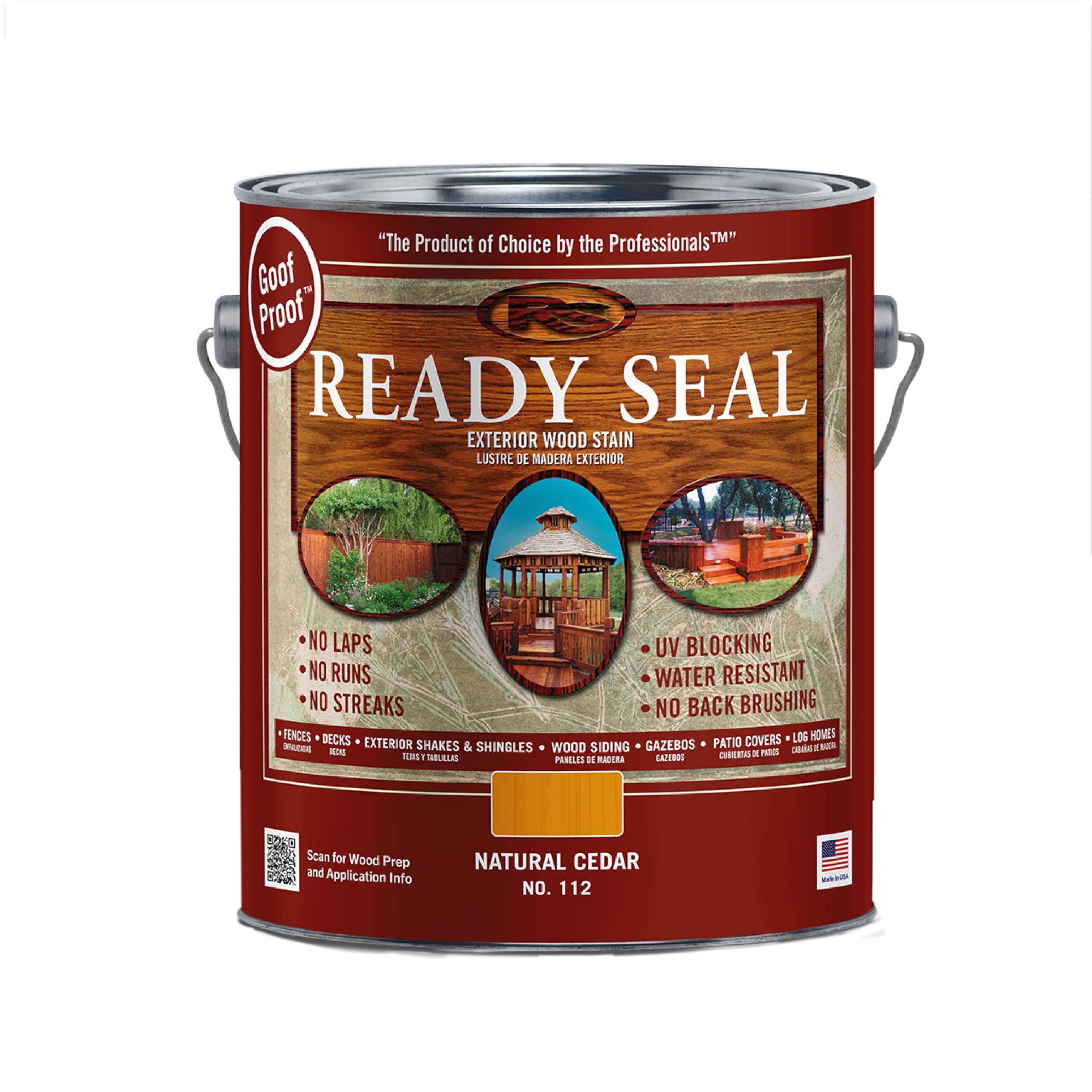
The Ready Seal 112 is the stain that contractors reach for when they don’t want to babysit a wet edge. Its oil-based formula is self-leveling, meaning you don’t have to back-brush or worry about lap marks—it blends itself. This is a massive advantage on long siding runs where maintaining a wet edge with a brush is nearly impossible.
Customers report that it can withstand rain within minutes of application and works across a wide temperature range, including direct sunlight. The finish is flat, letting the cedar grain remain the star. At about 7 pounds per gallon, the oil penetrates deeply, with users noting that reapplication requires no sanding or stripping—just clean and recoat.
The downside is that the color selection is limited compared to some water-based lines, and the pigment settles heavily, so stirring is mandatory. But for pure application ease and long-term durability on cedar siding, this is the benchmark.
Why it’s great
- No lap marks, runs, or streaks—truly goof-proof
- Can be applied in direct sun and rain within minutes
- Reapplication requires no stripping or sanding
Good to know
- Limited color palette compared to water-based stains
- Pigment settles quickly; must be stirred thoroughly before each use
2. TWP 101 Pro-Series Cedartone Exterior Wood Stain & Protectant

TWP 101 Pro-Series is a heavy-duty oil-based stain built for the toughest exterior wood conditions. It’s formulated with mildew-resistant additives and a water-repellent system that soaks deep into cedar fibers to prevent warping, cracking, and freeze-thaw damage—critical for siding in cold climates.
The coverage rate is about 300 square feet per gallon, and owners of log homes and rough-sawn cedar siding consistently praise its ability to penetrate deeply without leaving a tacky film. The Cedartone color produces a warm, natural look that neighbors will compliment. Application can be done with a brush, roller, or sprayer, but the oil-based formula has a strong odor, so a respirator is recommended during application.
The main caveat is that TWP 101 is a high-VOC formula—550 g/L—and is not available in several states including California and New York. For those regions, the TWP 1500 series is the alternative. But if you live outside those areas and want the deepest penetrating protection, this is the one.
Why it’s great
- Deep oil penetration prevents peeling and flaking on cedar
- Mildew-resistant formulation for damp climates
- Broad-spectrum weather protection against freeze-thaw cycles
Good to know
- Not available in many states due to VOC regulations
- Strong odor requires proper ventilation and a mask
3. TWP 1501 Cedartone Low VOC Wood Preservation Stain

The TWP 1501 is the low-VOC sibling of the 101, designed specifically to meet strict environmental regulations without compromising performance. It’s EPA registered as a wood preservative, meaning it actively prevents decay and structural damage while adding color.
Coverage is roughly 350 square feet per gallon, and the thin consistency allows it to soak into cedar rapidly. Users report excellent results on log homes and pressure-treated pine decks, with the stain drying in about 48 hours. The Cedartone color leans slightly darker than the 101, which some users prefer for a richer appearance.
The trade-off is that the low-VOC formula may require more careful application to avoid uneven absorption on very porous cedar. Some customers noted that the color difference between sun-exposed and shaded wood can be significant. But for those in VOC-restricted states seeking oil-based performance, this is the go-to.
Why it’s great
- EPA registered wood preservative prevents decay
- Low VOC compliant for restricted states
- Deep oil penetration with easy sprayer application
Good to know
- Color can vary significantly between sun and shade
- Strong odor persists for several days after application
4. KILZ Waterproofing Semi-Transparent Wood Stain, Cedar Naturaltone

KILZ brings decades of reputation to the table with this 100% acrylic semi-transparent stain that offers an excellent balance of performance and ease of use. It’s fade resistant, mildew resistant, and rainproof, with a satin finish that adds a touch of sheen without looking plasticky.
Coverage is impressive: 250-300 square feet per first coat and up to 600 square feet per second coat. The Cedar Naturaltone color is a classic reddish-brown that revitalizes weathered siding without masking the grain. Customers consistently rate it highly for application ease and value, with many noting it outperforms pricier brands.
The acrylic formulation means it forms a protective film on the surface rather than penetrating deep into the wood. This makes it more susceptible to peeling if moisture gets behind it, so proper surface prep is essential. It’s also warrantied for up to 5 years on siding—a solid assurance for the price point.
Why it’s great
- Excellent coverage at 250-500 sq. ft. per gallon
- Fade resistant, mildew resistant, and rainproof
- Trusted brand with great user satisfaction
Good to know
- Acrylic film may peel if moisture gets trapped under the surface
- Requires thorough surface prep before application
5. Thompson’s WaterSeal Semi-Transparent Waterproofing Wood Stain
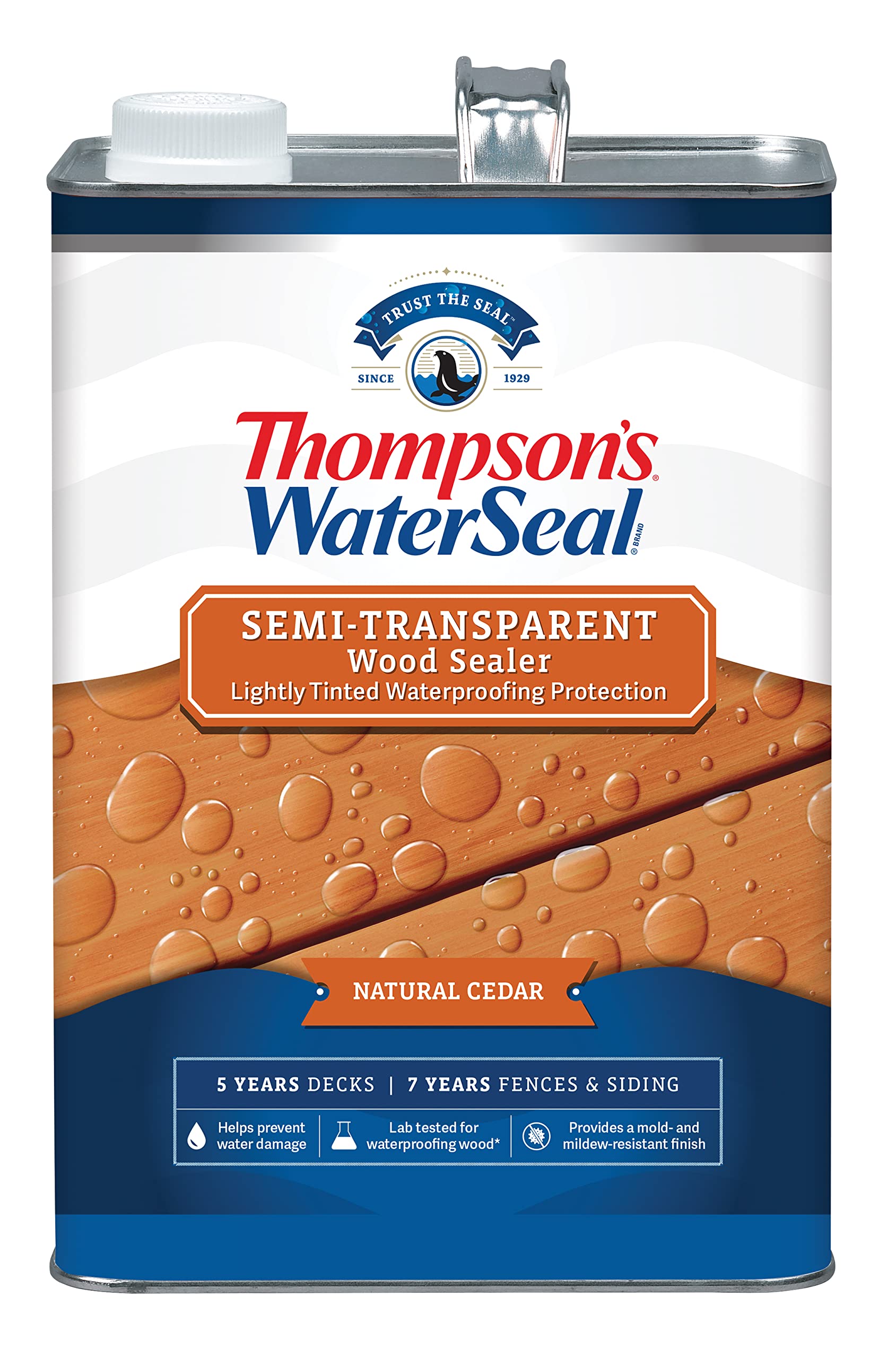
Thompson’s WaterSeal is a household name in exterior wood care, and this semi-transparent stain lives up to the reputation. It’s a water-based formula with advanced polymers that deliver fade-resistant color and UV protection. The Natural Cedar tint provides a lightly pigmented finish that lets the wood texture show through.
Coverage ranges from 150 to 400 square feet per gallon, and the stain can be applied to damp or dry wood, which is a nice flexibility for weekend warriors. The finish is semi-transparent, and users report that it goes on pink and dries to a warm redwood tone. Water beading is excellent initially, though some users in hot climates note that reapplication is needed after about four months.
The main complaint is that the color on the can is darker than the actual application, so test a small area first. It’s also not as deeply penetrating as oil-based options, so expect to reapply annually in high-UV areas.
Why it’s great
- Fade-resistant polymers keep color vibrant longer
- Can be applied to damp wood for faster project turnaround
- Exceeds ASTM D-4446 waterproofing standards
Good to know
- Needs reapplication every 4-6 months in hot, rainy climates
- Color dries significantly darker than the initial pink application
6. SaverSystems #1 Deck Premium Wood Fence Stain, Cedar

SaverSystems #1 Deck is a water-based, dual-purpose stain and sealer that prioritizes environmental friendliness without skimping on protection. With less than 50 g/L of VOCs, it’s one of the lowest-VOC options on the market, making it a great pick for those sensitive to chemical odors or living in strict regulatory zones.
The Cedar color delivers a flat, natural-looking finish that allows the wood grain to show through. It’s designed to prevent graying and fading caused by UV exposure, and it can be applied to damp wood, minimizing the wait between cleaning and staining. Cleanup is simple with soap and water, which is a major convenience.
Customers note that the product is runny and requires careful application to avoid drips, and some experienced that the deck floor finish lasted only one year while vertical surfaces held up better. It’s best for fences and siding where water pooling isn’t an issue, but less ideal for horizontal decking exposed to foot traffic and standing water.
Why it’s great
- Ultra-low VOC (under 50 g/L) for eco-friendly application
- Works on damp wood, reducing project downtime
- Easy soap and water cleanup
Good to know
- Thin consistency runs easily; requires drop cloths and careful technique
- Durability on horizontal surfaces is shorter than vertical applications
7. DEFY Essential Semi-Transparent Outdoor Wood Stain, Cedar Tone

DEFY Essential is an entry-level water-based stain and sealer that combines affordability with a solid formulation. It’s made with durable acrylic resins that resist cracking, peeling, and fading, and it offers a semi-transparent matte finish that enhances the wood’s natural beauty without overpowering it.
The cedar tone color is described as gorgeous without being overly orange, and users love how easy it is to apply with a spray gun or brush. Coverage is listed at 100-150 square feet per gallon for two coats, which is lower than most competitors, so plan accordingly. Cleanup is simple with soap and water.
The biggest limitation is durability. As a water-based film, it sits on the surface and is more prone to wearing off in high-traffic or weather-exposed areas. It’s a great budget option for refreshing a fence or cedar siding in mild climates, but don’t expect it to outlast oil-based alternatives on a deck that sees heavy sun and rain.
Why it’s great
- Affordable entry price for budget-conscious projects
- Beautiful cedar tone without orange undertones
- Easy application with sprayer and soap-and-water cleanup
Good to know
- Lower coverage rate than competitors (100-150 sq. ft. per gallon)
- Water-based film less durable than oil-based options on horizontal surfaces
FAQ
Can you stain cedar siding that has already turned gray?
How long does cedar siding stain last before needing reapplication?
Should I use a stain with a UV blocker on cedar siding?
What happens if you apply a water-based stain over an oil-based stain on cedar?
Do you need to prime cedar before staining?
Final Thoughts: The Verdict
For most users, the best cedar siding stain winner is the Ready Seal 112 because its goof-proof application and deep oil penetration deliver professional results without requiring a contractor’s skill. If you need a low-VOC formula for restricted states, grab the TWP 1501 Cedartone. And for budget-conscious DIYers with well-prepped surfaces, nothing beats the value of the KILZ Waterproofing Wood Stain.