
Finding the perfect 32-inch 4K monitor for gaming means balancing breathtaking visual fidelity with the raw speed required to keep your crosshairs on target. A poorly chosen panel can leave you with motion blur in competitive shooters or washed-out colors in your favorite open-world RPG, making every gaming session a compromise. The right monitor, however, transforms your desktop into a portal where every texture, shadow, and particle effect is rendered with razor-sharp clarity and fluid motion.
I’m Min — the co-founder and writer behind Gadgets Feed. I’ve spent countless hours researching and analyzing the technical specifications, real-world performance data, and user experiences of dozens of monitors to build this guide, focusing on the precise panel technologies, refresh rate thresholds, and color accuracy metrics that define the modern 32-inch 4K gaming experience.
This guide breaks down the critical specs and trade-offs to help you choose the ideal 32 inch 4k monitor for gaming that matches your hardware and your favorite genres.
How To Choose The Best 32 Inch 4K Gaming Monitor
Selecting the right 4K gaming monitor requires understanding how panel technology, refresh rate, response time, and connectivity interact with your gaming habits and PC hardware. A monitor is a long-term investment, and prioritizing the wrong spec can lead to buyer’s remorse.
Panel Technology: The Visual Foundation
The panel type fundamentally dictates the monitor’s image quality, viewing angles, and response times. IPS panels offer excellent color accuracy and wide viewing angles, making them great for strategy games and content creation. VA panels deliver superior contrast ratios with deeper blacks, ideal for single-player games and cinematic HDR. OLED panels represent the pinnacle, with perfect blacks, infinite contrast, and near-instantaneous response times, but come at a premium and require burn-in management.
Refresh Rate vs. GPU Capability
Higher refresh rates make motion look smoother and more responsive. A 144Hz display updates the image every 6.9 milliseconds, while a 240Hz monitor cuts that to just 4.2 milliseconds. However, driving a 4K resolution at these refresh rates requires significant GPU power. Pairing a 240Hz monitor with a mid-range graphics card that struggles to exceed 60 FPS in modern titles at 4K means you won’t benefit from the extra expense. Aim for a refresh rate that realistically matches what your hardware can deliver.
Connectivity: Future-Proofing Your Setup
HDMI 2.1 is essential for running 4K at high refresh rates on next-gen consoles like the PS5 and Xbox Series X. For PC gamers, DisplayPort 1.4 with Display Stream Compression (DSC) can handle 4K at 240Hz, while the newer DisplayPort 2.1a standard offers even higher bandwidth for uncompressed signal transmission. Ensure the monitor you choose has the ports to match your primary gaming devices.
Quick Comparison
On smaller screens, swipe sideways to see the full table.
| Model | Category | Best For | Key Spec | Amazon |
|---|---|---|---|---|
| ASUS ROG Strix XG32UCWMG | Premium OLED | Competitive & Immersive Play | 4K@240Hz / FHD@480Hz Dual Mode | Amazon |
| MSI MPG 322URX QD-OLED | Premium OLED | High-End PC & Console | DisplayPort 2.1a (80Gbps) | Amazon |
| MSI MAG 321UPX QD-OLED | High-Performance OLED | Fluid Gameplay | 240Hz / 0.03ms GtG Response | Amazon |
| Samsung Odyssey G8 G81SF | QD-OLED Flagship | Glare-Free Visuals | Gen 3 QD-OLED / 240Hz | Amazon |
| Samsung Odyssey G7 G70D | Smart Gaming IPS | All-in-One Entertainment | Built-in Smart TV / 144Hz | Amazon |
| Samsung Odyssey G7 G75F | Curved VA | Immersive Single-Player | 1000R Curve / 165Hz | Amazon |
| LG 32GQ750-B UltraGear | Reliable VA | Balanced Console Gaming | HDMI 2.1 / 144Hz | Amazon |
| BenQ MA320U | Mac-Compatible IPS | MacBook Productivity & Play | 90W USB-C Power Delivery | Amazon |
| CRUA 32″ 4K Curved | Value VA | High Refresh on a Budget | 240Hz / 1500R Curve | Amazon |
| KTC H32P22P | Entry-Level IPS | Versatile Desktop Use | Fast IPS / 165Hz | Amazon |
| Samsung Odyssey OLED G9 G91SD | Ultrawide OLED | Super-Ultrawide Immersion | 49″ 32:9 / 144Hz | Amazon |
In‑Depth Reviews
1. ASUS ROG Strix XG32UCWMG
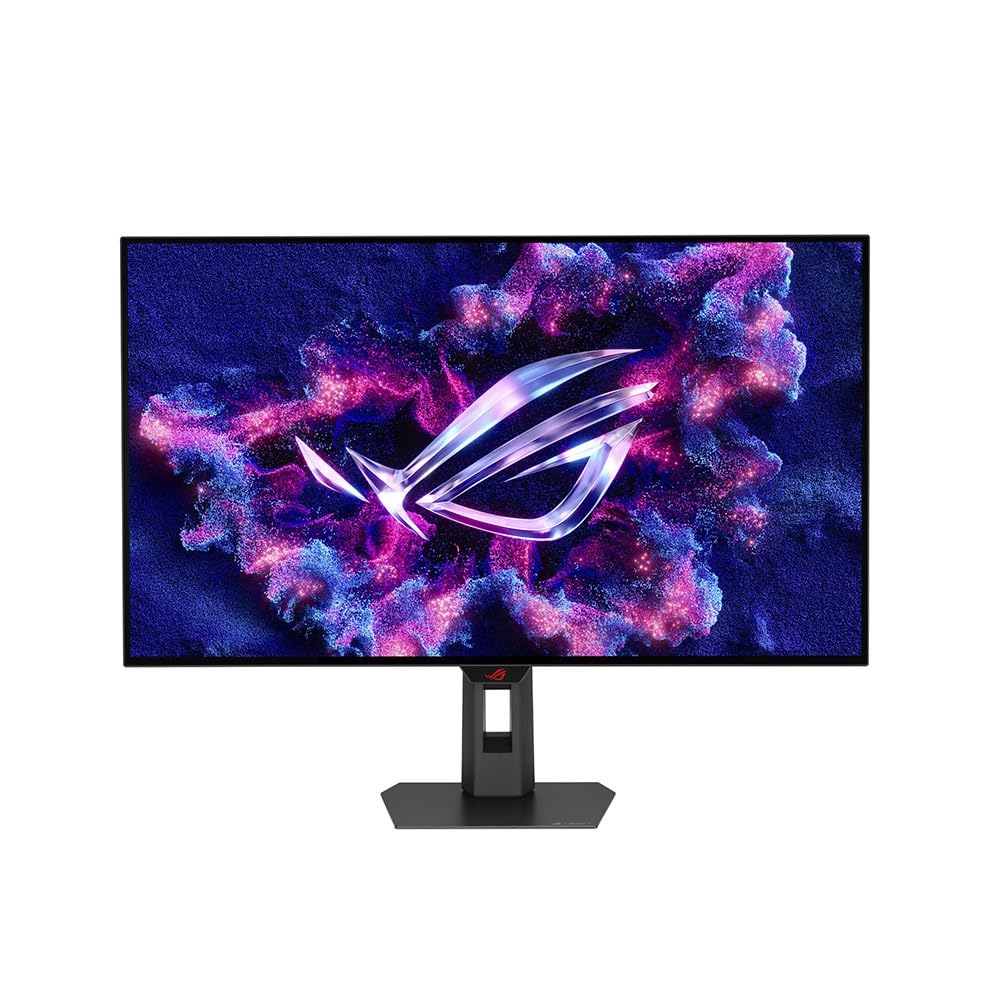
The ASUS ROG Strix XG32UCWMG redefines versatility with its innovative dual-mode WOLED panel, allowing you to switch between a stunning 4K resolution at a buttery-smooth 240Hz for immersive single-player titles and a blazing-fast 1080p at 480Hz for ultra-competitive esports where every millisecond counts. This flexibility alone makes it a unique contender, paired with a true 10-bit color depth and 99% DCI-P3 coverage for jaw-dropping HDR performance.
The TrueBlack Glossy panel delivers exceptional contrast and zero haze, making colors pop with a vibrancy that matte screens often mute. ASUS backs this with their comprehensive OLED Care Pro suite, which includes a Neo Proximity Sensor that automatically dims the screen when you step away, significantly reducing burn-in risk. The on-screen DisplayWidget Center allows for easy setting adjustments via mouse, keeping you in your game.
Connectivity is robust with multiple HDMI 2.1 ports and a DisplayPort 1.4 with DSC, easily handling high-bandwidth signals from both PCs and consoles. Some users noted the glossy finish can be reflective in very bright rooms, and the input switching logic can sometimes be finicky with USB-C hubs, but these are minor quibbles against a monitor that offers top-tier performance for both competitive and cinematic gaming.
Why it’s great
- Dual-mode 4K@240Hz and FHD@480Hz provides unmatched flexibility
- OLED Care Pro with Neo Proximity Sensor helps prevent burn-in
- Excellent HDR performance with TrueBlack Glossy panel
Good to know
- Glossy screen can cause reflections in brightly lit rooms
- Auto-input switching can be unreliable with certain USB-C hubs
2. MSI MPG 322URX QD-OLED

The MSI MPG 322URX QD-OLED represents the bleeding edge of gaming display technology, utilizing a third-generation QD-OLED panel that delivers incredibly deep blacks, vibrant colors, and an astonishing 0.03ms GtG response time. The 240Hz refresh rate eliminates motion blur entirely, making fast-paced action feel almost preternaturally smooth. For those building a top-tier gaming PC, this monitor sets a very high bar.
Its standout feature is the inclusion of DisplayPort 2.1a (UHBR20), offering a massive 80Gbps of bandwidth. This allows for native, lossless 4K at 240Hz without needing Display Stream Compression (DSC), ensuring pixel-perfect fidelity. The monitor also covers 99% of the DCI-P3 color space and is VESA DisplayHDR True Black 400 certified, providing exceptional HDR performance that brings games to life.
MSI includes their OLED Care 2.0 software suite to mitigate burn-in, and the monitor comes with a three-year burn-in warranty for peace of mind. While the built-in speakers are serviceable and the design is sleek, the steep price point and reports of the screen being susceptible to scratches during cleaning are key considerations. It also demands a very powerful GPU to fully utilize its potential.
Why it’s great
- DisplayPort 2.1a enables lossless 4K@240Hz
- Third-gen QD-OLED offers stunning color and contrast
- Includes a comprehensive 3-year burn-in warranty
Good to know
- Premium price point
- Screen coating may be prone to scratches if not cleaned carefully
3. MSI MAG 321UPX QD-OLED

The MSI MAG 321UPX QD-OLED brings the core QD-OLED experience to a more accessible price point without sacrificing the essential gaming performance. Boasting a 240Hz refresh rate and a 0.03ms GtG response time, it delivers the same incredible motion clarity and deep blacks as its more expensive siblings. The image quality is simply transformative for games with dark environments or vibrant worlds.
This monitor features a third-generation QD-OLED panel with a Delta E ≤ 2 color accuracy rating, ensuring colors are both vivid and true-to-life. It supports VESA DisplayHDR True Black 400, providing a noticeable step up in HDR performance over standard displays. For console gamers, the HDMI 2.1 ports support 4K at 120Hz, making it an excellent pairing for a PS5 or Xbox Series X.
While it lacks the DisplayPort 2.1a of the higher-end MPG model, using DSC over DisplayPort 1.4 still achieves a flawless 4K@240Hz picture. Some users have reported the mandatory OLED Care reminders can be intrusive, and the 250 cd/m² typical brightness in SDR is lower than some high-end LCDs. However, for the price, it delivers an OLED experience that is hard to beat.
Why it’s great
- Excellent price-to-performance ratio for QD-OLED
- 240Hz refresh rate with near-instant response times
- Great HDR performance with VESA True Black 400
Good to know
- Mandatory OLED Care pop-ups can interrupt gameplay
- SDR brightness is decent but not class-leading
4. Samsung Odyssey G8 G81SF
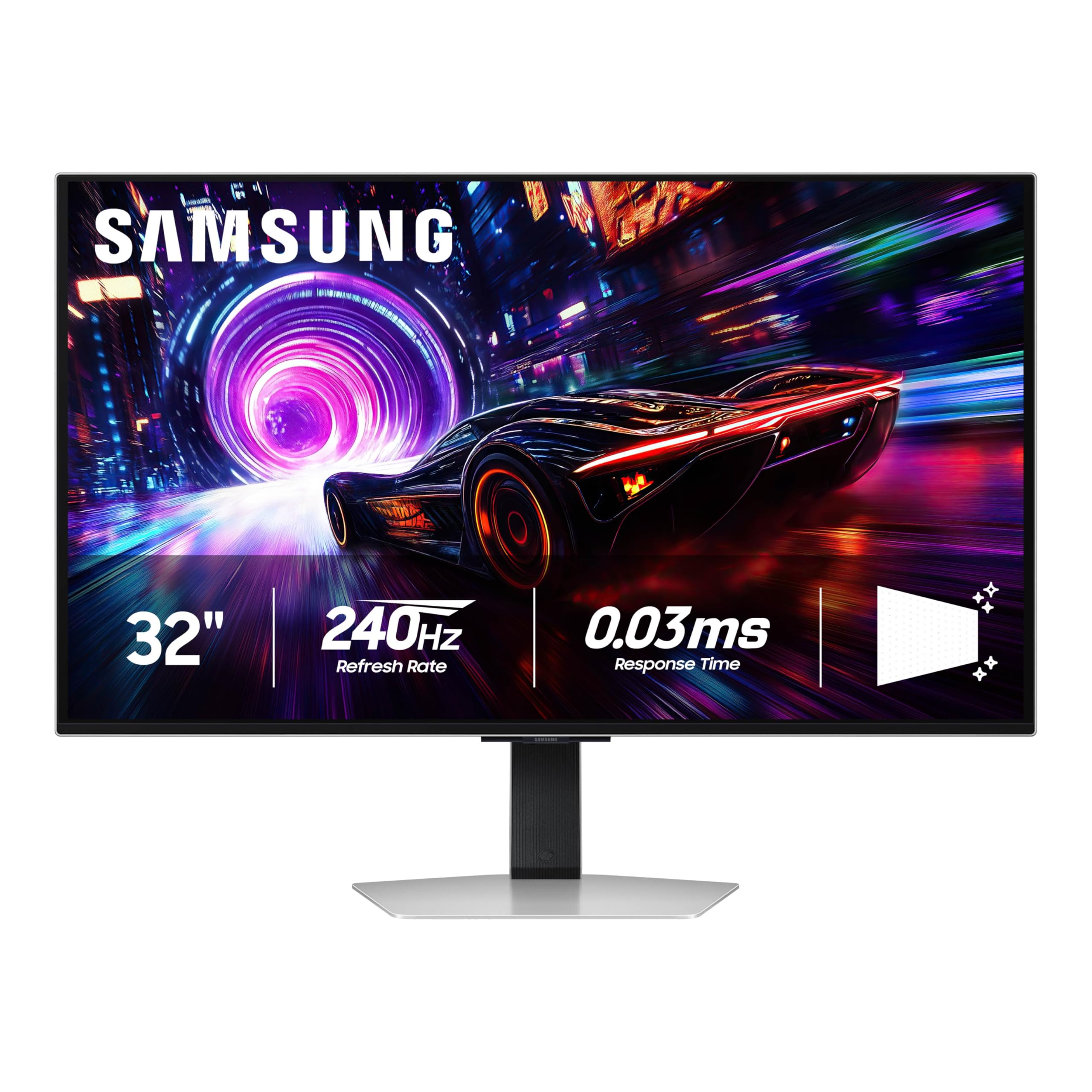
The Samsung Odyssey G8 G81SF is a flagship QD-OLED monitor that prioritizes image quality and a distraction-free viewing experience. Its standout feature is Samsung’s Glare Free technology, which drastically reduces reflections from ambient light sources, making the deep blacks and vibrant QD-OLED colors visible even in a moderately bright room. This solves one of the biggest practical complaints about glossy OLED panels.
Performance is top-tier with a 240Hz refresh rate and a 0.03ms GtG response time. It is VESA DisplayHDR True Black 400 certified and covers 99% of the DCI-P3 color gamut. Samsung also integrates a Dynamic Cooling System using a pulsating heat pipe, which they claim dissipates heat five times faster than a graphite sheet to reduce burn-in risk. The CoreSync and CoreLighting+ features add immersive ambient lighting that reacts to on-screen colors.
The monitor’s ergonomic stand offers height, tilt, and swivel adjustments. However, some users have reported mixed experiences with Samsung’s warranty service. The build quality is solid, but the lack of a USB-C port with high power delivery limits its appeal for laptop users. If you want a top-quality OLED with the best anti-glare solution on the market, this is a strong candidate.
Why it’s great
- Excellent Glare Free technology for use in lit rooms
- Stunning QD-OLED picture quality and color accuracy
- Innovative Dynamic Cooling System for burn-in prevention
Good to know
- No USB-C port with high power delivery
- Samsung’s warranty service has received mixed feedback
5. Samsung Odyssey G7 G70D
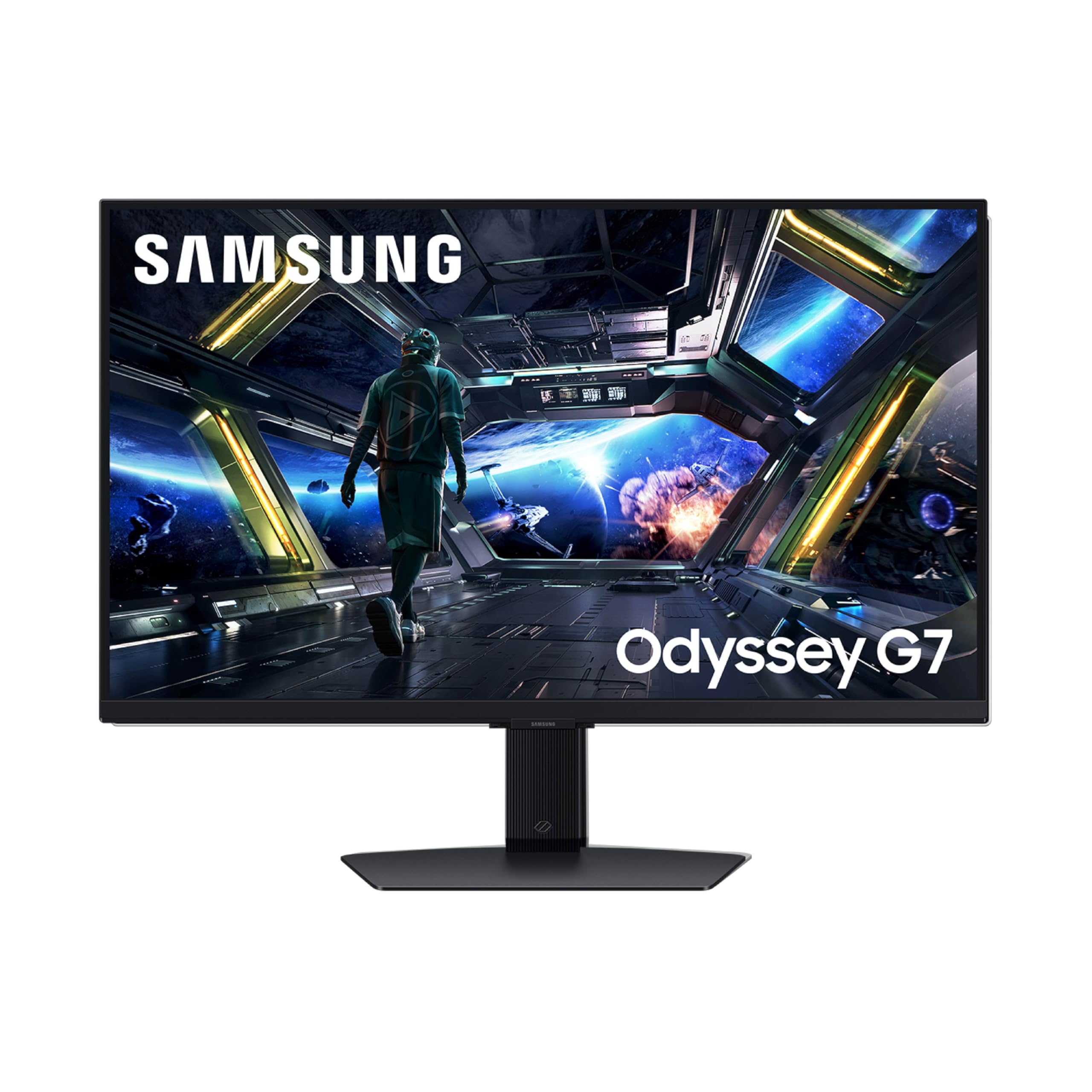
The Samsung Odyssey G7 G70D is a versatile gaming monitor that doubles as a full-function smart TV, thanks to its built-in Samsung Gaming Hub and remote control. This allows you to stream games from cloud services like Xbox Game Pass or NVIDIA GeForce NOW, and watch content from Netflix and other apps without connecting a PC. It’s a powerful all-in-one solution for a bedroom or dorm setup.
Under the hood, it features a 32-inch Fast IPS panel with a 4K resolution, a 144Hz refresh rate, and a 1ms GtG response time. It supports both AMD FreeSync Premium and is G-Sync compatible, ensuring tear-free gameplay with either GPU brand. Samsung’s 4K AI Upscaling processor helps sharpen lower-resolution content, and the Dynamic Black Equalizer improves visibility in dark game scenes without washing out bright areas.
The stand is fully ergonomic with height, tilt, swivel, and pivot adjustments. While the smart features are convenient, the monitor’s built-in interface can feel cluttered with ads, and the 350 cd/m² brightness is average, which can make HDR performance feel less impactful than on brighter models. For those who want gaming and media consumption in one package, this is a unique and compelling choice.
Why it’s great
- Built-in Gaming Hub and Smart TV apps for standalone use
- Fast IPS panel with excellent motion handling
- Fully adjustable ergonomic stand
Good to know
- Smart TV interface can contain unwanted ads and bloatware
- Peak brightness is only average for true HDR impact
6. Samsung Odyssey G7 G75F
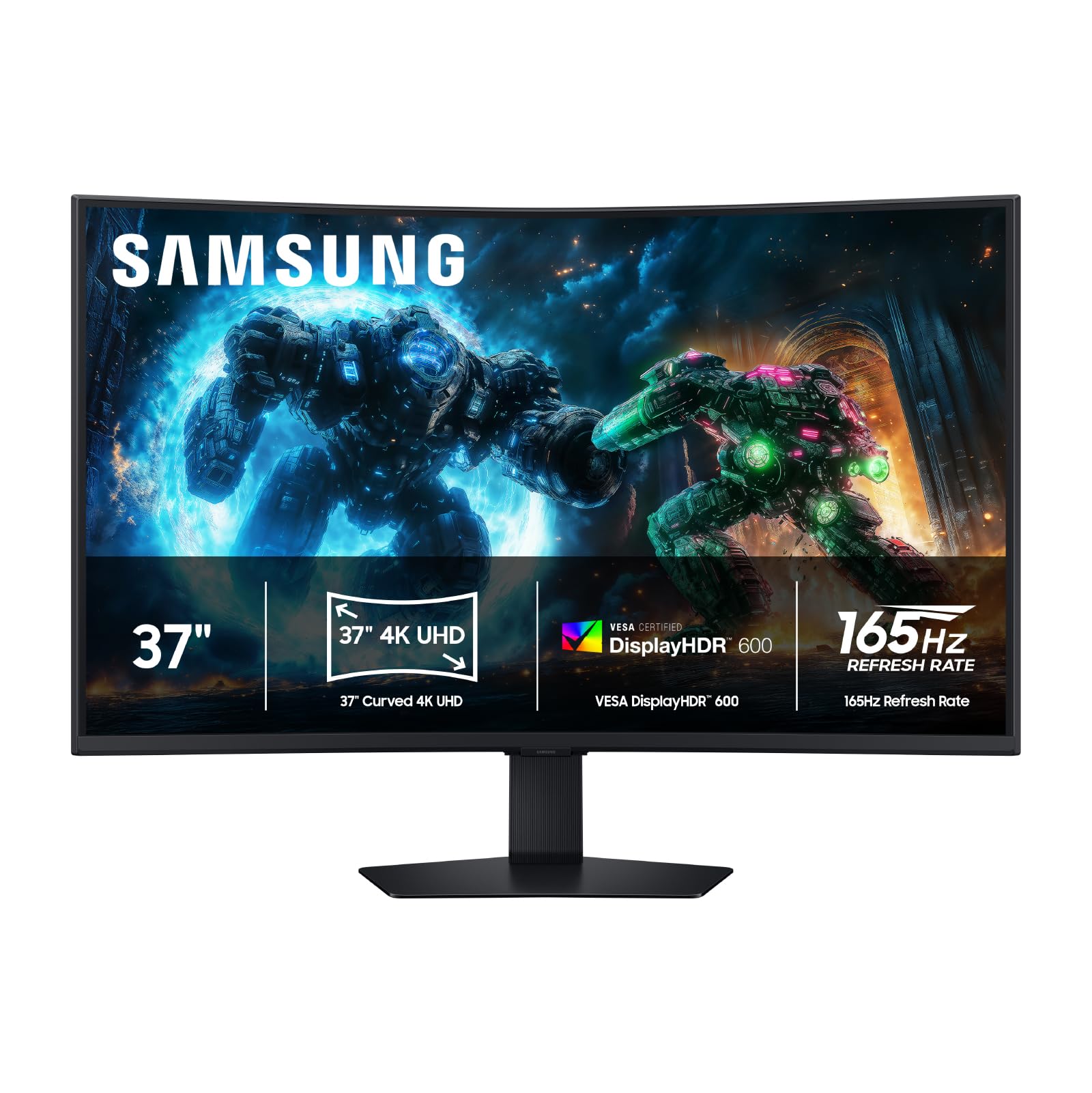
The Samsung Odyssey G7 G75F offers a unique 37-inch screen size with an aggressive 1000R curvature that wraps around your peripheral vision, creating an incredibly immersive experience for single-player campaigns and cinematic adventures. The VA panel delivers a strong 3000:1 contrast ratio, resulting in deep blacks that are a significant step up from typical IPS monitors, making HDR content look far more impactful.
With a 4K resolution, 165Hz refresh rate, and 1ms GtG response time, it provides a fast and responsive feel suitable for most genres. It also supports AMD FreeSync Premium Pro for low-latency, tear-free gaming. The VESA DisplayHDR 600 certification ensures it can reach a higher peak brightness than many entry-level HDR monitors, providing more punch in highlights.
While the curved screen is excellent for immersion, it may not suit everyone, especially for productivity work that benefits from a flat screen. Some users find the extreme curve distracting during competitive shooters. The build is solid with a good ergonomic stand, but its size is slightly unconventional, so checking your desk dimensions is wise. If you want a large, curved screen for pure immersion, this is a top choice.
Why it’s great
- Extremely immersive 1000R curved VA panel
- Superior 3000:1 contrast ratio for deep blacks
- VESA DisplayHDR 600 for brighter HDR highlights
Good to know
- Aggressive curve can be distracting for some users
- VA panel has slower pixel response than IPS or OLED
7. LG 32GQ750-B UltraGear

The LG 32GQ750-B UltraGear is a solid, no-nonsense gaming monitor that focuses on core performance features at a competitive price. It utilizes a 32-inch VA panel with a 4K resolution and a 144Hz refresh rate, making it a great match for next-gen consoles via HDMI 2.1, which supports 4K at 120Hz. The 1ms GtG response time helps minimize motion blur in fast-paced action.
This monitor covers 90% of the DCI-P3 color gamut and supports HDR10, providing decent color vibrancy and contrast. The VA panel’s 2500:1 contrast ratio ensures blacks are deeper than what you’d get from a typical IPS screen. LG includes useful gaming features like Dynamic Action Sync, Black Stabilizer, and a crosshair overlay, as well as 5W stereo speakers tuned with Waves MaxxAudio for decent built-in sound.
The ergonomic stand offers height, tilt, and swivel adjustments, which is a welcome feature for comfort. However, the 400 cd/m² peak brightness is adequate but not spectacular for HDR. While a great value proposition, some quality control issues have been reported, including dead pixels. It is a balanced, feature-rich monitor that gets the fundamentals right.
Why it’s great
- HDMI 2.1 for 4K@120Hz on PS5/Xbox Series X
- Good contrast from the VA panel
- Fully ergonomic stand with height adjustment
Good to know
- HDR performance is decent but not class-leading
- Some users have reported dead pixels out of the box
8. BenQ MA320U

The BenQ MA320U is a niche but highly specialized monitor designed from the ground up for seamless integration with Apple’s MacBook lineup. It is the strongest option here if you use a Mac and occasionally game. It features dual USB-C ports, with one delivering a powerful 90W of power delivery to charge your MacBook while simultaneously carrying the display and data signal over a single cable.
Its key feature is BenQ’s Mac Color Match technology, which automatically calibrates the monitor to match the color profile and brightness of your MacBook’s built-in display, providing a uniform visual experience across both screens. It covers a wide P3 color gamut, ensuring vibrant and accurate colors. The built-in hotkey puck and the ability to control brightness and volume directly from a Mac keyboard further enhance the user experience.
This IPS panel offers crisp text and wide viewing angles, ideal for productivity. However, it is only a 60Hz monitor, which is its primary weakness for gaming. It lacks high refresh rate support, so it’s best suited for casual or slower-paced titles. If your primary workflow is on a Mac and gaming is a secondary concern, this monitor is a perfect fit.
Why it’s great
- 90W USB-C power delivery for MacBook charging
- Mac Color Match for seamless visual integration
- Excellent P3 color gamut for accurate color work
Good to know
- Limited to 60Hz refresh rate, not for competitive gaming
- Lacks built-in webcam and microphone
9. CRUA 32″ 4K Curved
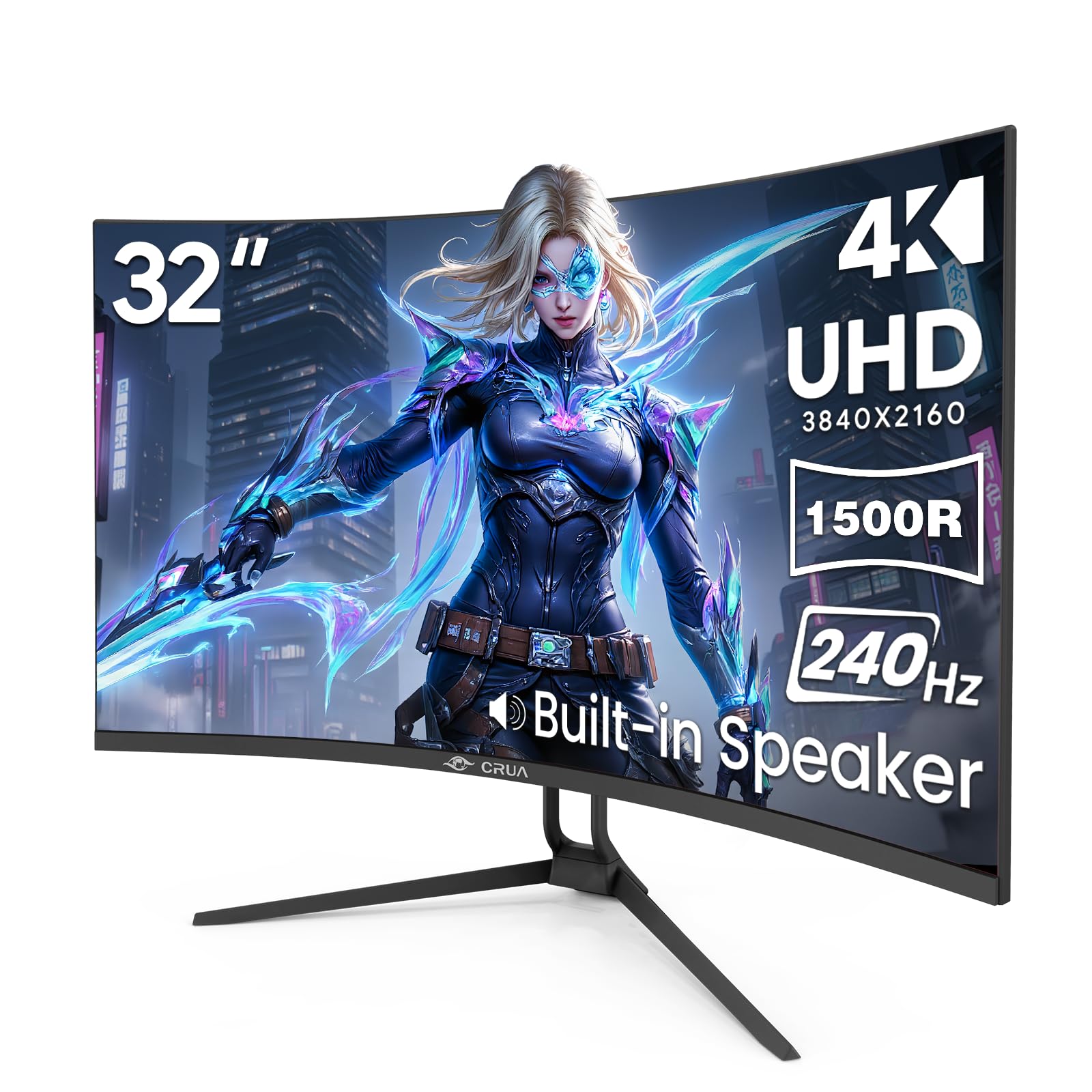
The CRUA 32″ 4K Curved gaming monitor aggressively targets the value segment, offering a stunning feature set for the price. It packs a 240Hz refresh rate, a 1500R VA panel, and AMD FreeSync support, specs usually found on much more expensive monitors. This makes it an enticing proposition for gamers who want high-refresh 4K but are working within a tight budget.
The VA panel provides a decent 3000:1 contrast ratio for deep blacks and covers 120% of the sRGB color gamut for good color saturation. It also includes features often missing in this price bracket, like HDMI 2.1 ports, which are essential for console gaming, and rear RGB lighting for some desk flair. The Picture-in-Picture (PIP) and Picture-by-Picture (PBP) functionality is a nice bonus for multitasking.
However, the budget nature becomes apparent in the build quality and ergonomics. The stand only offers tilt adjustment and no height or swivel functionality. Some users have reported minor screen uniformity issues. The 300 cd/m² brightness is modest. For those who prioritize raw refresh rate and 4K resolution over build quality and premium features, it’s a very compelling option.
Why it’s great
- Incredibly low price for a 240Hz 4K monitor
- Includes HDMI 2.1 for console compatibility
- PIP/PBP support for enhanced multitasking
Good to know
- Limited ergonomics with only tilt adjustment
- Build quality and brightness are entry-level
10. KTC H32P22P
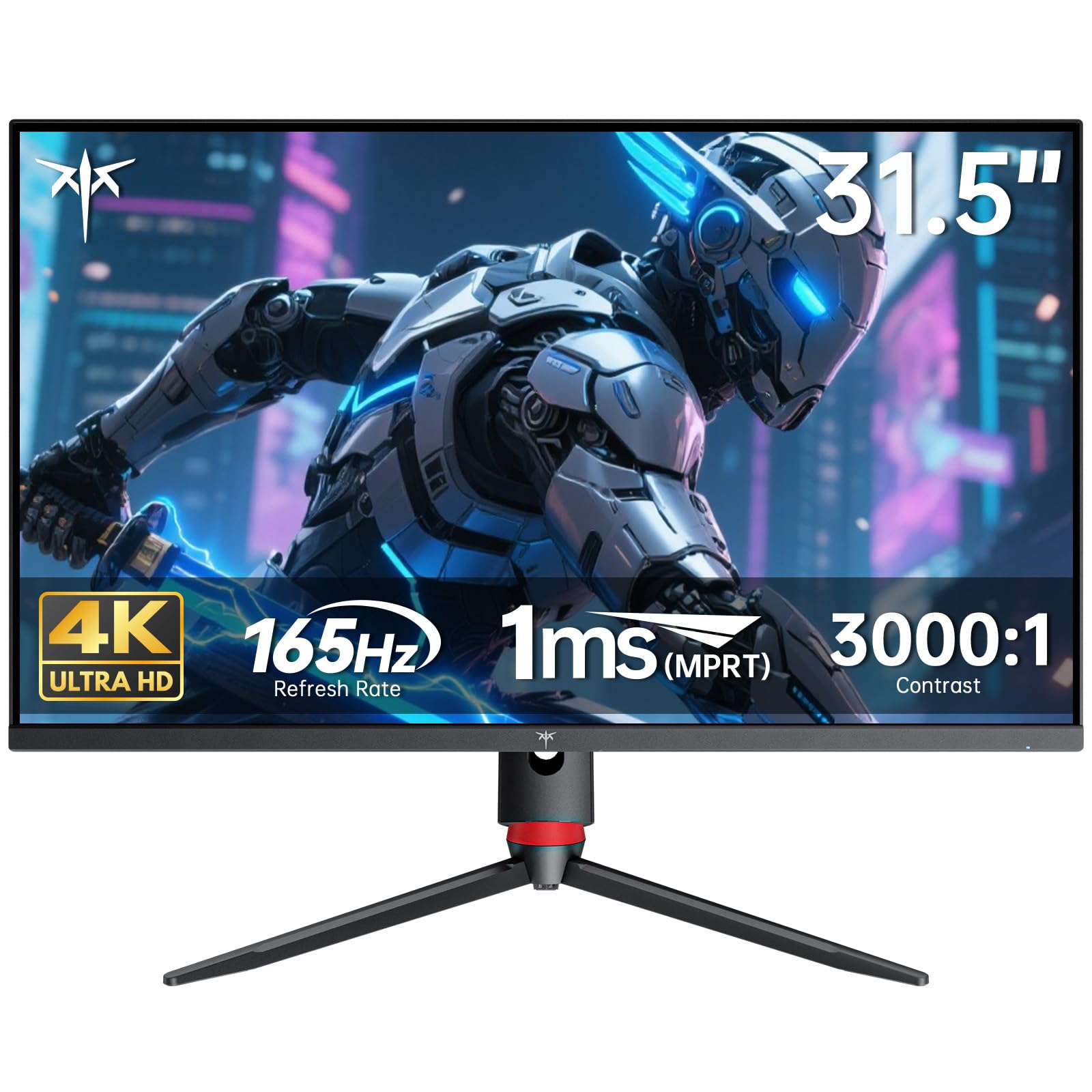
The KTC H32P22P is a strong entry-level contender that prioritizes a fantastic price-to-feature ratio. It utilizes a Fast IPS panel, which provides better viewing angles and color consistency compared to VA panels found at similar prices. With a 165Hz refresh rate and 1ms MPRT response time, it offers a smooth gaming experience without breaking the bank.
The monitor delivers a 121% sRGB color gamut and a 3000:1 contrast ratio, which is unusually high for an IPS panel and helps produce decent black depth. Connectivity is a major highlight at this price, featuring both HDMI 2.1 and DisplayPort 1.4, allowing for high-bandwidth connections to modern GPUs and consoles. The stand provides tilt and height adjustments, a rarity and major plus in this category.
While the on-screen display menu can be a bit cumbersome to navigate, this is a minor frustration. The built-in speakers are also very basic. Some users have reported minor backlight bleed in dark corners, which is common for budget IPS panels. If you want a solid, no-frills 4K gaming monitor with a modern Fast IPS panel and essential features, this is an excellent choice.
Why it’s great
- Excellent value with a Fast IPS panel at a low price
- Includes HDMI 2.1 and DP 1.4 for modern connectivity
- Stand offers height adjustment, which is rare at this level
Good to know
- OSD menu is not very user-friendly
- May exhibit minor backlight bleed typical of budget IPS panels
11. Samsung Odyssey OLED G9 G91SD

The Samsung Odyssey OLED G9 G91SD is a massive 49-inch super-ultrawide monitor that uses a QD-OLED panel to deliver a truly breathtaking and immersive gaming experience. Its 32:9 aspect ratio is essentially equivalent to two 27-inch 1440p monitors side-by-side, filling your entire peripheral vision. For racing, flight, and strategy games, this level of immersion is unmatched by any standard 16:9 monitor.
The QD-OLED panel provides the hallmark infinite contrast, vivid colors, and deep blacks. The 144Hz refresh rate is sufficient for most games, though not as high as some 16:9 at the same price. It supports both G-Sync and AMD FreeSync Premium Pro for tear-free gameplay. The built-in Picture-in-Picture (PIP) feature allows you to display content from two different sources simultaneously, perfect for multitasking without a second screen.
This monitor is a premium and niche product. It requires a very powerful GPU to run modern games at its native 5120×1440 resolution, and its 32:9 aspect ratio may not be supported by all games, sometimes requiring patches or resulting in black bars. The aggressive curve and sheer size also demand significant desk space. It is a phenomenal choice for a specific type of gamer who prioritizes absolute immersion above all else.
Why it’s great
- Unmatched 49-inch immersive ultrawide field of view
- Stunning QD-OLED picture quality with perfect blacks
- PIP feature allows for great multitasking
Good to know
- Requires massive desk space and a powerful GPU
- Not all games support 32:9 aspect ratio natively
FAQ
Can I run a 4K 240Hz monitor with my current graphics card?
Is a curved monitor better for gaming than a flat one?
What is the difference between G-Sync and FreeSync?
Do I need HDMI 2.1 for a 4K gaming monitor?
What does VESA DisplayHDR True Black 400 mean?
Final Thoughts: The Verdict
For most users, the 32 inch 4k monitor for gaming winner is the ASUS ROG Strix XG32UCWMG because its dual-mode panel provides an unbeatable combination of high-resolution immersion and esports-level speed. If you want uncompromising image quality with future-proof connectivity, grab the MSI MPG 322URX QD-OLED. And for the best value that brings high-refresh 4K to a wider audience, nothing beats the MSI MAG 321UPX QD-OLED.