
The difference between a garden full of oversized tomatoes and a patch of stunted leaves often comes down to what is actually inside those brown bags stacked at the garden center. Many bagged soil amendments look identical on the shelf but vary wildly in nitrogen content, texture, and microbial life the moment you open them.
I’m Min — the co-founder and writer behind Gadgets Feed. For this guide, I cross-referenced dozens of customer grow logs and analyzed the N-P-K ratios, particle sizes, and organic certifications on seven standard bags to find which ones deliver real results without requiring a chemistry degree to use.
Whether you are top-dressing raised beds or mixing a custom potting blend for container vegetables, the best bags of manure combine balanced nutrient profiles with application-friendly textures that work across multiple garden scenarios.
How To Choose The Best Bags Of Manure
Bagged manure is not a one-size-fits-all product. The source animal, processing method, nutrient concentration, and particle size all influence how the material behaves in your soil and how your plants respond. Understanding these variables is the only way to avoid leggy growth or outright plant burn.
Know Your N-P-K Before You Buy
The three numbers on every bag — nitrogen, phosphorus, potassium — tell you exactly what the product will do. High nitrogen (the first number) drives leafy green growth, which is ideal for lawns and spinach but counterproductive for flowering crops like tomatoes. Chicken manure tends to run nitrogen-heavy, while cow manure offers a more balanced profile suitable for general garden use.
Fresh vs. Composted: The Burn Factor
Fresh manure is too hot for direct contact with plant roots and can kill seedlings within days. Composted manure has gone through a controlled breakdown process that stabilizes the nutrients and eliminates the risk of burning. The labels “dehydrated” and “composted” are not interchangeable — dehydrated products still require careful application in small amounts, whereas composted products are safe to use as a soil conditioner in larger volumes.
Texture and Particle Size Matter More Than You Think
Fine, screened particles mix evenly into potting blends and raised beds without creating air pockets. Coarse particles or products with visible sticks and clumps work better as a top dressing or mulch layer. If you are making a precise container mix, you want a uniformly screened product; if you are building a new bed from scratch, a rougher texture improves aeration.
Quick Comparison
On smaller screens, swipe sideways to see the full table.
| Model | Category | Best For | Key Spec | Amazon |
|---|---|---|---|---|
| Michigan Peat Baccto Wholly Cow | Premium | Large beds & mushroom substrate | 40 quarts, odor-free | Amazon |
| Coast of Maine Organic Planting Soil | Premium | Heirloom tomatoes & containers | 20 quarts, OMRI listed | Amazon |
| Brut Cow Compost | Premium | Indoor plants & delicate blooms | 10 quarts, odor-free | Amazon |
| Black Kow Composted Cow Manure | Mid-Range | General garden & raised beds | 8 quarts, 1:1 mixing ratio | Amazon |
| Back to the Roots Worm Castings | Mid-Range | Houseplants & seed starting | 5 pounds, no-burn formula | Amazon |
| Espoma Organic Chicken Manure | Mid-Range | Heavy feeders like tomatoes | 3.75 pounds, 5-3-2 ratio | Amazon |
| Hoffman Dehydrated Super Manure | Entry-Level | Container gardening & small pots | 5 pounds, pelletized form | Amazon |
In‑Depth Reviews
1. Michigan Peat Baccto Wholly Cow Horticultural Compost and Manure
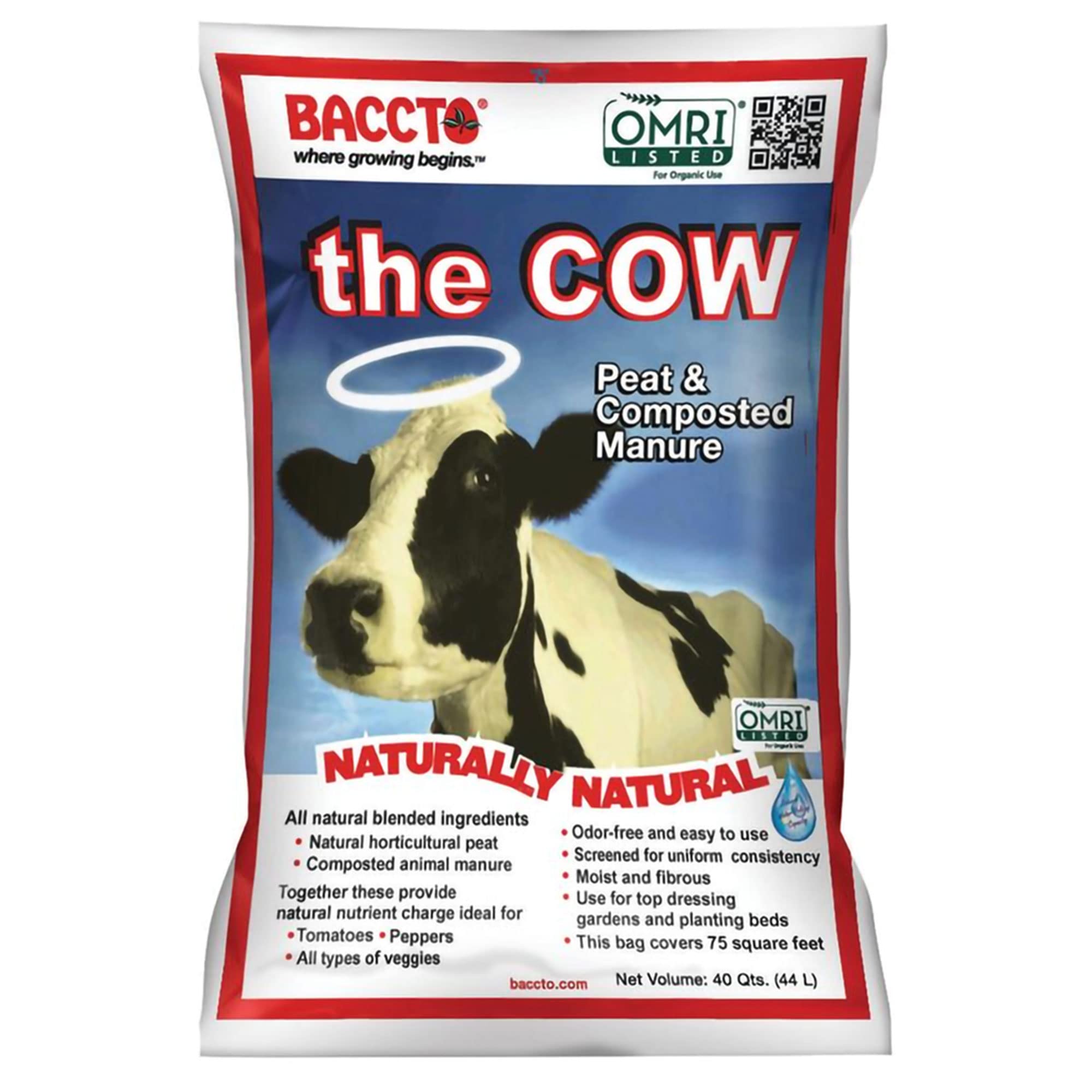
The 40-quart bag from Michigan Peat is the largest volume option in this lineup, and it earns its premium reputation through consistent texture and zero odor. The blend combines natural peat with composted animal manure, producing a dark, fluffy medium that spreads evenly across raised beds without any of the ammonia smell that plagues less processed products.
Customers report using it successfully as a mushroom substrate when mixed 1:1 with coco coir and sterilized, which speaks to the uniform particle size and lack of contaminants like large sticks or clumps. The moisture retention properties reduce watering frequency noticeably during hot spells, making it a practical choice for gardeners who cannot drench their beds daily.
At 34 pounds total weight, this is the bag to buy when you are amending an entire vegetable garden or building new beds from scratch. The screw-fine texture also works well as a thin top dressing for established lawns without smothering the grass.
Why it’s great
- Massive 40-quart bag covers large areas efficiently
- Fully composted with no odor and no risk of plant burn
- Screened to a uniform, fluffy consistency with minimal debris
Good to know
- Heavy bag at 34 pounds is awkward to carry without a wheelbarrow
- Some users report occasional small sticks that need hand removal
2. Coast of Maine Organic & Natural Planting Soil for Vegetables & Tomatoes

Coast of Maine blends composted manure with sphagnum peat moss and aromatic cedar wood to create a lightweight potting mix that drains well while holding enough moisture for thirsty tomato plants. The cedar inclusion serves a dual purpose — it naturally deters soil-borne insects and helps aerate the root zone without breaking down too quickly.
Heirloom tomato growers specifically praise this product for its drainage characteristics, noting that it prevents the soggy root conditions that trigger blossom-end rot. The OMRI listing confirms it meets organic production standards, which matters for anyone planning to sell produce at farmers markets or maintain a strict organic home garden.
One drawback is the price per quart relative to bulk options like the Wholly Cow. For a small patio garden of two or three tomato plants, the 20-quart bag is perfectly sized; anyone managing a full quarter-acre plot should look elsewhere for better value.
Why it’s great
- Lightweight yet moisture-retentive formula ideal for container growing
- OMRI certified organic for strict gardening standards
- Cedar content naturally repels certain soil pests without chemicals
Good to know
- Premium price per quart compared to bulk compost options
- Some users report fungus gnats; recommend sterilizing before indoor use
3. Brut Cow Compost – Nutrient-Rich Composted Cow Manure

Brut positions itself as an odor-free, finely sifted cow manure compost that works indoors and out without the burning risk that haunts raw manure products. The 10-quart bag is compact enough to store under a potting bench but packed with enough nitrogen, calcium, and iron to give vegetables and flowers a noticeable boost within weeks of application.
First-time growers have tested it in a 3:2 ratio with standard potting soil for tomato seeds and reported fast germination followed by thicker stems than seedlings grown in plain soil. The OMRI organic certification adds confidence for edible gardens where synthetic inputs are not welcome.
The fine sifting is the standout feature here. Most budget-friendly composts arrive with chunks of wood or bark that require manual screening, but Brut arrives ready to mix straight into seed-starting trays or sprinkle around delicate annuals without burying small plants.
Why it’s great
- Finely sifted texture allows direct use in seed-starting mixes
- Completely odor-free; safe for indoor container gardening
- OMRI listed organic and gentle enough for seedlings
Good to know
- Smaller bag size means multiple purchases for large beds
- Premium price per quart compared to less processed options
4. Black Kow Nitrogen Phosphate Composted Cow Manure

Black Kow has built a loyal following among southern gardeners who rely on its ability to transform both sandy and clay-heavy soils. The composted cow manure contains millions of beneficial bacteria that convert nitrogen into plant-available forms, which directly addresses the common problem of nutrient leaching in loose, sandy ground.
A 1:1 mixing ratio with existing soil is recommended, and users report that flowers planted with this amendment bloom significantly longer and brighter than those in unamended beds. The smell is undeniably strong — several reviewers describe it as “terrible” — but the results justify the brief olfactory sacrifice during application.
The 8-quart size is enough to refresh a medium raised bed or a dozen large containers. For gardeners who want a no-fuss way to improve water retention in porous soils, Black Kow delivers measurable results that are visible within a single growing season.
Why it’s great
- Beneficial bacteria actively convert nutrients for immediate plant uptake
- Improves moisture retention in sandy soils and aeration in clay soils
- Composted formula eliminates burning risk for tender roots
Good to know
- Strong manure smell during application, unpleasant for some users
- 8-quart bag is relatively small for large-scale garden projects
5. Back to the Roots Organic Worm Castings

Worm castings occupy a different category than traditional manure because they are completely safe to apply at any concentration without fear of burning. Back to the Roots packages pure vermicompost in a 5-pound resealable bag that blends seamlessly into chunky houseplant mixes without compacting the soil or creating waterlogged zones.
The beneficial microbes in these castings help suppress harmful soil pathogens, which is a hidden advantage for indoor gardeners battling damping-off disease in seedlings. Customers mixing it with coco chips, perlite, and charcoal report that their aroids and ferns respond with faster root development and darker leaf coloration.
This product is also a strong choice for butterfly gardeners growing milkweed for monarchs, as the gentle nutrient profile supports healthy foliage without encouraging the soft, rapid growth that attracts aphids.
Why it’s great
- Zero risk of plant burn allows heavy application on sensitive houseplants
- Beneficial microbes actively suppress soil pathogens
- Resealable bag keeps castings fresh between uses
Good to know
- Holds significant moisture; reduce watering frequency when used as amendment
- Lower N-P-K than chicken manure, not ideal for heavy feeders alone
6. Espoma Organic Chicken Manure 3.75 lb. Bag

Espoma has been producing natural organics since 1929, and this chicken manure formulation reflects that long experience. The 5-3-2 analysis is rich in nitrogen for encouraging rapid leaf and vine growth, while the 8 percent calcium content supports strong cell wall development in fruiting crops.
Tomato growers are the most vocal fans here, reporting that a single spring application produces vines so vigorous they require staking within weeks. The granulated form is ready to use straight from the bag and needs no mixing, which simplifies monthly applications throughout the growing season.
The small 3.75-pound bag is clearly designed for the home vegetable gardener who manages a few raised beds, not someone running a market farm. The chicken manure scent is strong and unmistakable, but it dissipates after watering the granules into the soil.
Why it’s great
- High nitrogen content drives explosive growth in leafy vegetables and tomatoes
- Added calcium helps prevent blossom-end rot in fruiting plants
- Ready-to-use granules require no mixing or composting
Good to know
- Strong chicken manure odor lingers until watered in
- Small bag size may require multiple purchases for larger gardens
7. Hoffman 20505 Dehydrated Super Manure 4-2-3

Hoffman takes a different approach from the composted options by dehydrating poultry manure and forming it into easy-to-handle pellets. The 4-2-3 ratio provides a moderate nitrogen boost that improves soil texture and encourages earthworm activity without the strong odor typically associated with fresh chicken manure.
Container gardeners specifically benefit from the pelletized form because it allows precise application — one teaspoon per 6-inch pot or one tablespoon per 12-inch pot — which reduces the guesswork that leads to over-fertilization. The 5-pound bag will last multiple seasons for a small patio garden setup.
Because this is dehydrated rather than composted, the pellets need moisture to activate and can still burn plants if applied too heavily. Following the label directions is non-negotiable with this product, but when used correctly it builds humus content and improves soil structure at a very accessible price point.
Why it’s great
- Pelletized form allows precise, controlled application for container gardening
- Faint, non-offensive odor compared to raw chicken manure
- Encourages earthworm activity and improves long-term soil structure
Good to know
- Dehydrated formula can still burn plants if over-applied
- Bag lacks a resealable closure; needs clips or storage tub
FAQ
Can I use bagged manure directly on seedlings without burning them?
How much manure should I mix into a standard 4×8 raised bed?
What is the difference between chicken manure and cow manure for tomatoes?
Final Thoughts: The Verdict
For most users, the best bags of manure winner is the Michigan Peat Baccto Wholly Cow because it delivers the largest volume of odor-free, uniformly screened compost at a price per quart that undercuts every premium competitor. If you want a soil-specific boost for heavy-feeding tomatoes, grab the Espoma Organic Chicken Manure. And for container gardening without any burning risk, nothing beats the Back to the Roots Worm Castings.