
On-ear ANC headphones promise the perfect middle ground: the portability and breathability of an on-ear design paired with active noise cancellation that actually works. The problem is that many on-ear models compromise on the seal necessary for effective ANC, letting ambient noise bleed past the ear cushions and forcing you to crank the volume. The best models in this category solve that engineering puzzle with deeper ear pads, adaptive ANC algorithms, and better driver tuning that compensates for the reduced passive isolation.
I’m Min — the co-founder and writer behind Gadgets Feed. My research digs into the measurable specs that define real-world ANC performance, from decibel cancellation depth to microphone array configurations that determine call clarity in noisy environments.
Whether you need uninterrupted focus on a cross-country flight or crystal-clear calls in a bustling open office, this guide to the best anc on-ear headphones breaks down the critical differences between lab-tested specs and actual daily use.
How To Choose The Best ANC On-Ear Headphones
Selecting the right on-ear ANC headphones requires balancing four competing priorities: noise cancellation depth, battery endurance, comfort for extended wear, and call quality. Unlike over-ear models, on-ear headphones rely more heavily on active cancellation because the ear pads cannot create a perfect acoustic seal around your ears. The following factors determine whether a model will actually deliver silence or leave you disappointed.
Noise Cancellation Architecture: Adaptive vs. Fixed ANC
Fixed ANC applies a blanket cancellation profile that works well for constant droning noises like airplane engines or air conditioners. Adaptive ANC, found in models like the Sony WH-1000XM6 and Bose QuietComfort Ultra, uses multiple microphones to sample your environment in real time and adjust the cancellation filter every few milliseconds. This is critical for on-ear headphones because the inconsistent seal means the ANC algorithm must work harder to maintain silence across different head shapes and positions. Look for models with at least six microphones dedicated to ANC — fewer mics often results in audible hiss or pressure sensation.
Battery Endurance and Fast Charging Tradeoffs
On-ear ANC headphones span a massive range here. Entry-level models may offer 24 hours with ANC on, while top performers like the Marshall Milton A.N.C. and JBL Live 780NC push past 50 hours. The tradeoff is that longer battery life usually means larger batteries and heavier headphones. Fast charging specs matter more than raw capacity: a 5-minute charge that gives 4 hours of playback (as seen in the JBL Live 780NC) is far more useful daily than 40 hours of total life with a slow recharge rate. Prioritize models with quick top-up capabilities if you travel frequently or forget to charge overnight.
Comfort Design for On-Ear Fit
On-ear headphones exert pressure on a smaller area of your ear compared to over-ear designs. The critical specs here are ear pad depth (at least 15mm of cushion depth prevents pinching), clamping force measured in Newtons (8–12N is comfortable, above 12N causes fatigue in under 30 minutes), and pad material (protein leather traps heat, while mesh or fabric covers breathe better but pass more high-frequency noise). Models with swiveling or rotating ear cups, like the Marshall Milton A.N.C., distribute pressure more evenly across the ear and reduce hot spots during extended sessions.
Call Quality and Microphone Array Design
Microphone placement and count determine whether your voice cuts through wind, traffic, and crowd noise. Beamforming microphone arrays — using two or more mics per ear cup — isolate your voice by canceling sounds coming from the sides and rear. The Sennheiser MOMENTUM 4 uses four digital beamforming mics with wind noise suppression, while the JBL Live 780NC employs an AI-trained algorithm that learns your voice patterns. For all-day conference calls, prioritize models with at least three microphones total and some form of AI-based background suppression. Avoid models that place the mic only on the cable, as cable-borne noise degrades clarity.
Quick Comparison
On smaller screens, swipe sideways to see the full table.
| Model | Category | Best For | Key Spec | Amazon |
|---|---|---|---|---|
| Marshall Milton A.N.C. | Premium | All-day wear with adaptive ANC | 80-hour battery (ANC off) | Amazon |
| Sony WH-1000XM6 | Premium | Industry-leading noise cancellation | QN3 processor, 12 mics | Amazon |
| Bose QC Ultra (2nd Gen) | Premium | Immersive audio and best ANC | Spatial audio, CustomTune | Amazon |
| JBL Live 780NC | Mid-Range | Value with pro-level ANC | Adaptive ANC 2.0, AI calls | Amazon |
| Sennheiser MOMENTUM 4 | Mid-Range | Audiophile sound with ANC | 60-hour battery, aptX Adaptive | Amazon |
| beyerdynamic AVENTHO 100 | Mid-Range | Planar magnetic drivers on-ear | Planar magnetic driver | Amazon |
| Bose QuietComfort | Mid-Range | Bose ANC at a lower price | Quiet/Aware modes, EQ | Amazon |
| Beats Solo 4 | Mid-Range | Lightweight on-ear design | 50-hour battery, Spatial Audio | Amazon |
| JLab Epic Work ANC | Budget | Office calls and multitasking | 90-hour battery, charging hub | Amazon |
In‑Depth Reviews
1. Marshall Milton A.N.C.
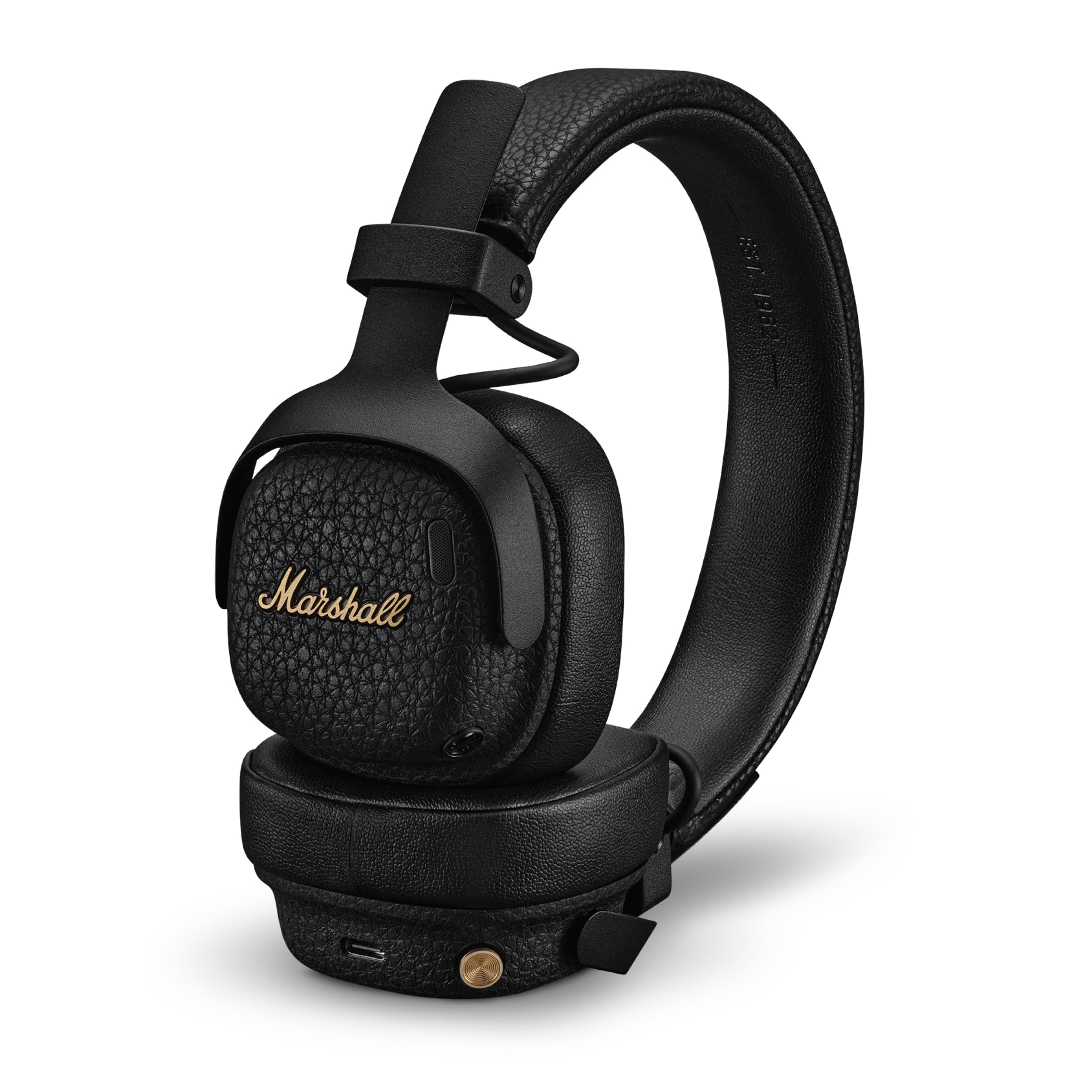
The Marshall Milton A.N.C. strikes a rare balance in the on-ear ANC market: it delivers 80 hours of playback without ANC and a still-impressive 50 hours with ANC active, outpacing every other model in this guide. The adaptive ANC uses multiple microphones to adjust cancellation filters in real time, compensating for the inherent leakiness of the on-ear form factor. Reviewers consistently note that while the ANC isn’t quite as deep as over-ear flagships from Bose or Sony, it handles droning noises like airplane engines and HVAC systems extremely well — and the transparency mode lets critical sounds through without removing the headphones.
The soundstage spatial audio is the standout feature here. Marshall’s implementation creates a convincing sense of space that makes stereo content feel wider without the artificial phasing artifacts common in cheaper spatial audio processing. The 32mm dynamic drivers deliver warm, punchy bass with clear mids, though treble extension rolls off slightly at high volumes. The adaptive loudness feature automatically adjusts the EQ curve as volume changes, maintaining balanced tonality from quiet listening to loud sessions.
Comfort is excellent for on-ear headphones thanks to thick, swiveling ear pads that conform to different ear shapes. The foldable design with a metal hinge adds durability, and the customizable M-button lets you assign functions like ANC toggle, voice assistant, or EQ profile switching. The only real downside is that the included carry case is a drawstring pouch rather than a hard shell — but at 80 hours of battery life, you won’t be charging it often enough to worry about travel damage.
Why it’s great
- Exceptional 80-hour battery life outpaces every competitor
- Soundstage spatial audio creates convincing width without phasing artifacts
- Adaptive ANC with effective transparency mode for on-ear form factor
- Replaceable battery design extends product lifespan
Good to know
- ANC not as deep as over-ear Bose/Sony flagships
- Only a drawstring pouch included, no hard case
- Ear pads can cause fatigue during 4+ hour continuous wear sessions
2. Sony WH-1000XM6

The Sony WH-1000XM6 represents the current pinnacle of ANC technology in a headphone form factor. The new QN3 processor is rated at 7x the processing speed of the QN1 used in the XM5, enabling real-time optimization across 12 adaptive microphones. For on-ear users, this matters immensely: the faster processor can detect and cancel noise within milliseconds of a sound starting, rather than the delayed response typical of fixed ANC systems. The result is that the WH-1000XM6 cancels a wider frequency spectrum — including human voices in the 300–3000 Hz range — than any other on-ear-capable headphone currently on the market.
The 30mm custom drivers use a lightweight carbon fiber dome that splits the difference between rigidity for bass control and weight reduction for transient response. High frequencies are crisp without sibilance, and the bass remains tight even at maximum ANC levels. The Auto Ambient Sound Mode adds intelligence: the headphones automatically adjust the mix between music and ambient noise based on your activity, so you can hear a boarding announcement on a plane without manually switching modes. The Sony | Sound Connect app offers a 10-band EQ with presets, though the default tuning is already very balanced.
Battery life is rated at 30 hours with ANC active, which is average for this tier, but the 3-minute quick charge to get 3 hours of playback is industry-fastest. Bluetooth 5.3 with LE Audio support ensures stable connections and future-proofing for Auracast audio sharing. The only tradeoff is that the WH-1000XM6 is an over-ear design, meaning it has a larger footprint than true on-ear models — but for those who prioritize ANC performance above all else, the form factor penalty is worth the noise cancellation gain.
Why it’s great
- QN3 processor delivers faster, wider-frequency ANC than any competitor
- 12 adaptive microphones optimize cancellation in real time
- Studio-quality audio with carbon fiber driver dome for clear highs
- Best-in-class 3-minute quick charge for 3 hours of playback
Good to know
- Over-ear design larger than true on-ear models
- Requires Sony app to switch between multiple devices
- Firmware updates needed out of the box for optimal performance
3. Bose QuietComfort Ultra (2nd Gen)
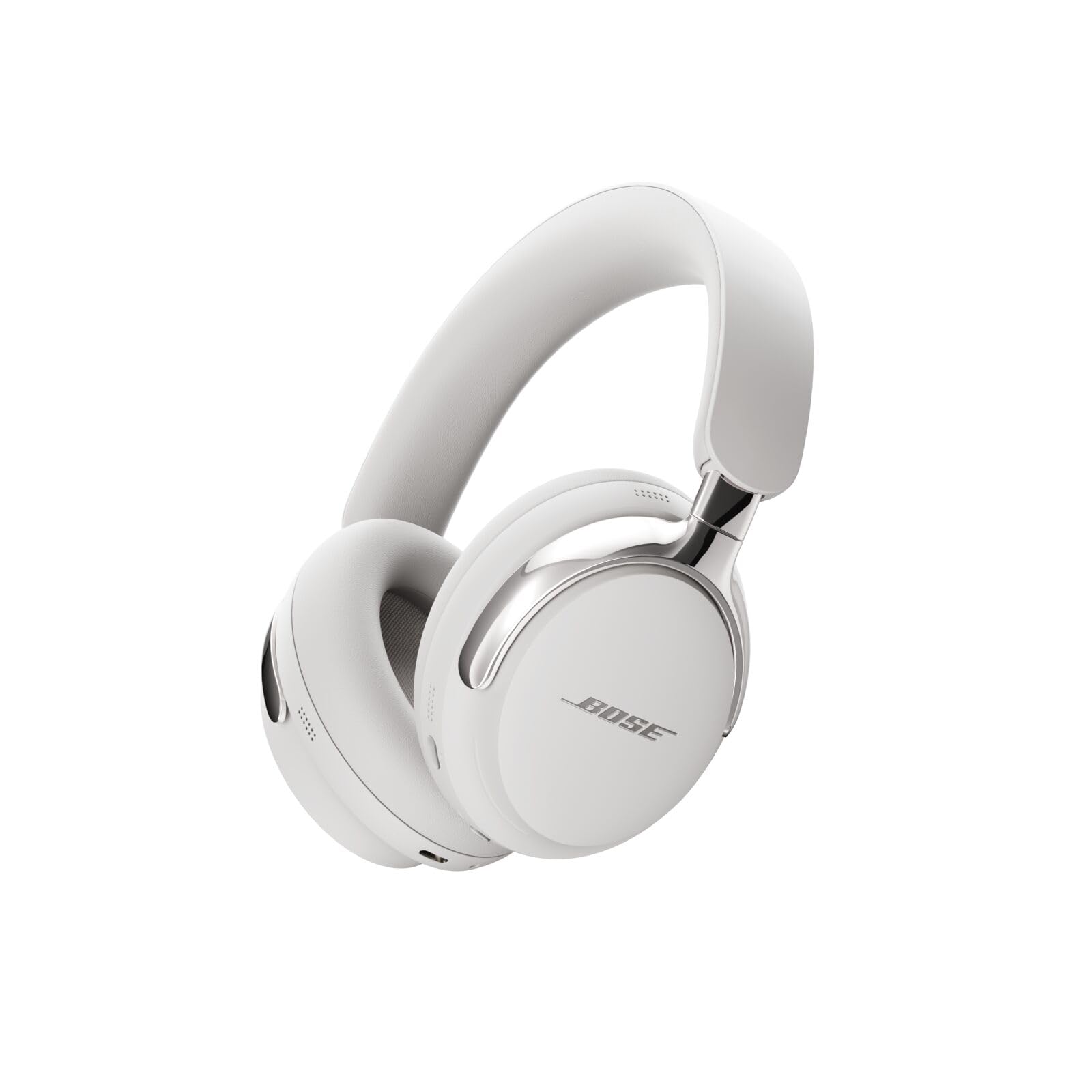
The Bose QuietComfort Ultra (2nd Gen) takes a different approach to ANC than Sony’s brute-force cancellation: Bose uses CustomTune technology that plays an inaudible tone into your ear canal, measures the acoustic response, and calibrates the ANC filter specifically to your ear’s unique shape. This personalized approach is especially valuable for on-ear headphones where the acoustic seal varies dramatically between users. The result is ANC that feels natural — no pressure or hiss, just silence that adapts to how the headphones sit on your head at any moment.
The breakthrough feature is the three listening modes: Quiet Mode for full ANC, Aware Mode for transparency, and Immersion Mode that combines ANC with Bose Immersive Audio spatialization. The new Cinema Mode spatializes video content, balancing dialogue and sound effects to create a movie-theater experience within the headphone soundstage. The 30-hour battery life drops to 23 hours with Immersive Audio active, which is a significant tradeoff — but the quality of the spatial processing is best-in-class for content consumption.
Comfort is where Bose historically excels, and the QC Ultra 2nd Gen maintains that reputation with plush earpads and a refined metal headband that distributes weight evenly. The noise-rejecting microphones use AI-based suppression to filter wind and background chatter, making call quality comparable to dedicated headset hardware. Bluetooth 5.4 provides the most stable wireless connection in this guide. The main limitation is that multipoint is limited to two active connections at once, and switching requires manual intervention rather than being automatic.
Why it’s great
- CustomTune personalizes ANC calibration to each user’s ear shape
- Cinema Mode creates immersive spatial audio for video content
- Noise-rejecting mics with AI background suppression for clear calls
- Plush ear cushions and padded headband for all-day wear
Good to know
- Battery drops to 23 hours with Immersive Audio active
- Multipoint limited to two simultaneous connections
- Max volume lower than some competitors
4. JBL Live 780NC
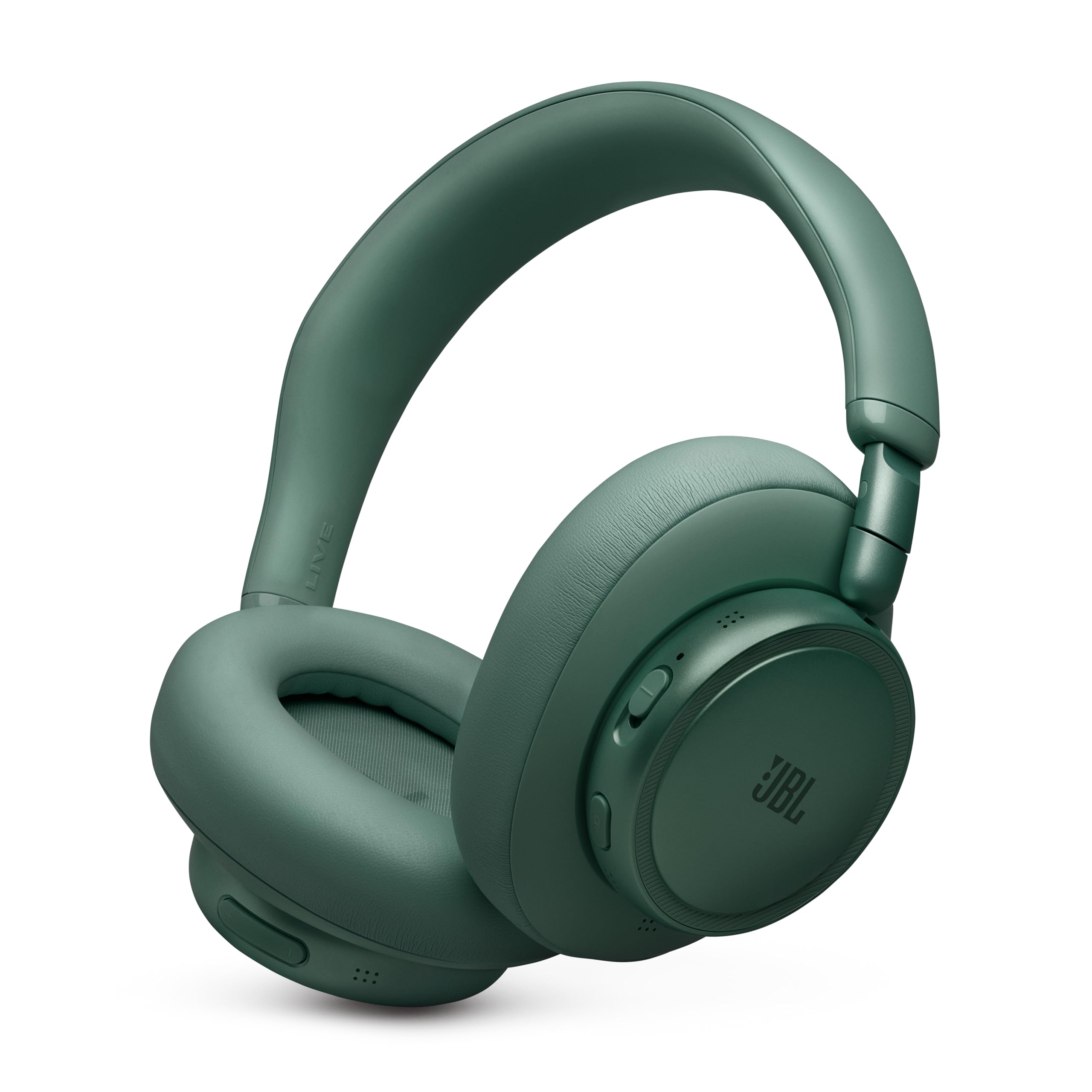
The JBL Live 780NC delivers ANC performance that rivals premium models at a mid-range price point. The True Adaptive Noise Cancelling 2.0 system uses six microphones to continuously analyze your environment and adjust the cancellation filter in real time. Reviewers report that the ANC is effective enough to block the sound of a zero-turn lawnmower — a level of isolation typically reserved for over-ear flagships. The 40mm drivers with JBL Signature Sound tuning provide punchy, energetic bass that suits pop and electronic music without muddying the midrange.
Battery life is a standout at 80 hours with ANC off and up to 50 hours with ANC active. The 5-minute speed charge delivers 4 additional hours of playback, which is the fastest recharge-to-playback ratio in this guide. The over-ear design features soft, ergonomically shaped earcups with a lightweight silicone headband that reduces pressure on the top of the head. The fold-flat mechanism with a metal hinge adds durability for travel, though the included soft pouch offers less protection than a hard case.
The 2-mic Perfect Calls 2.0 system uses an AI-trained algorithm to suppress wind and background noise, making the Live 780NC one of the best call-quality options in this guide. The JBL Headphones app offers Personi-Fi 3.0 customization that creates a hearing profile based on your sensitivity across different frequencies. LE Audio support with Auracast compatibility future-proofs the headphones for upcoming Bluetooth audio sharing features. The only notable omission is the lack of a USB-C charging cable in the box — a minor but irritating oversight.
Why it’s great
- Adaptive ANC 2.0 with six mics rivals premium over-ear models
- 80-hour battery life with 5-minute speed charge for 4 more hours
- AI-trained call quality suppresses wind and background chatter
- Personi-Fi 3.0 creates personalized hearing profile for optimal sound
Good to know
- Over-ear design not as compact as true on-ear models
- No USB-C charging cable included in the box
- Touch controls lack physical feedback for blind operation
5. Sennheiser MOMENTUM 4

The Sennheiser MOMENTUM 4 puts sound quality first, using 42mm transducers — the largest driver size in this guide — paired with aptX Adaptive codec support for high-resolution wireless audio. The sound signature is neutral and detailed, with deep bass extension, clear mids, and extended treble that avoids the rolled-off top end common in ANC headphones. Sennheiser’s Smart Control app offers a 5-band EQ with presets and a bass boost toggle, though the default tuning is so well-balanced that most users won’t need adjustment.
The adaptive noise cancellation uses four digital beamforming microphones to block distractions, supplemented by a transparency mode that lets in ambient sound for awareness. ANC performance is good for on-ear headphones — it blocks consistent noises like fans and engines well — but it struggles more than over-ear competitors with irregular sounds like loud conversations or barking dogs. The 60-hour battery life is class-leading for this tier, and fast charging delivers 2 hours of playback from a 10-minute charge.
Comfort is excellent thanks to a cushioned headband and plush ear pads that distribute clamping force evenly. The foldable design reduces footprint for travel, and the included carry case is a premium hard-shell case with an integrated pocket for the USB-C and audio cables. The four noise-canceling microphones ensure crystal-clear call quality with wind noise suppression. The main issues reported by reviewers are occasional Bluetooth audio cutouts on PC systems and a volume limit that feels restrictive when listening in very noisy environments.
Why it’s great
- Largest 42mm drivers with aptX Adaptive for high-res wireless audio
- 60-hour battery life with 10-minute fast charge for 2 hours playback
- Neutral, detailed sound signature with deep bass response
- Four beamforming mics deliver excellent call quality
Good to know
- ANC struggles with irregular sounds like loud conversations
- Bluetooth audio cutouts reported on PC systems
- Volume limited to prevent hearing damage in loud environments
6. beyerdynamic AVENTHO 100
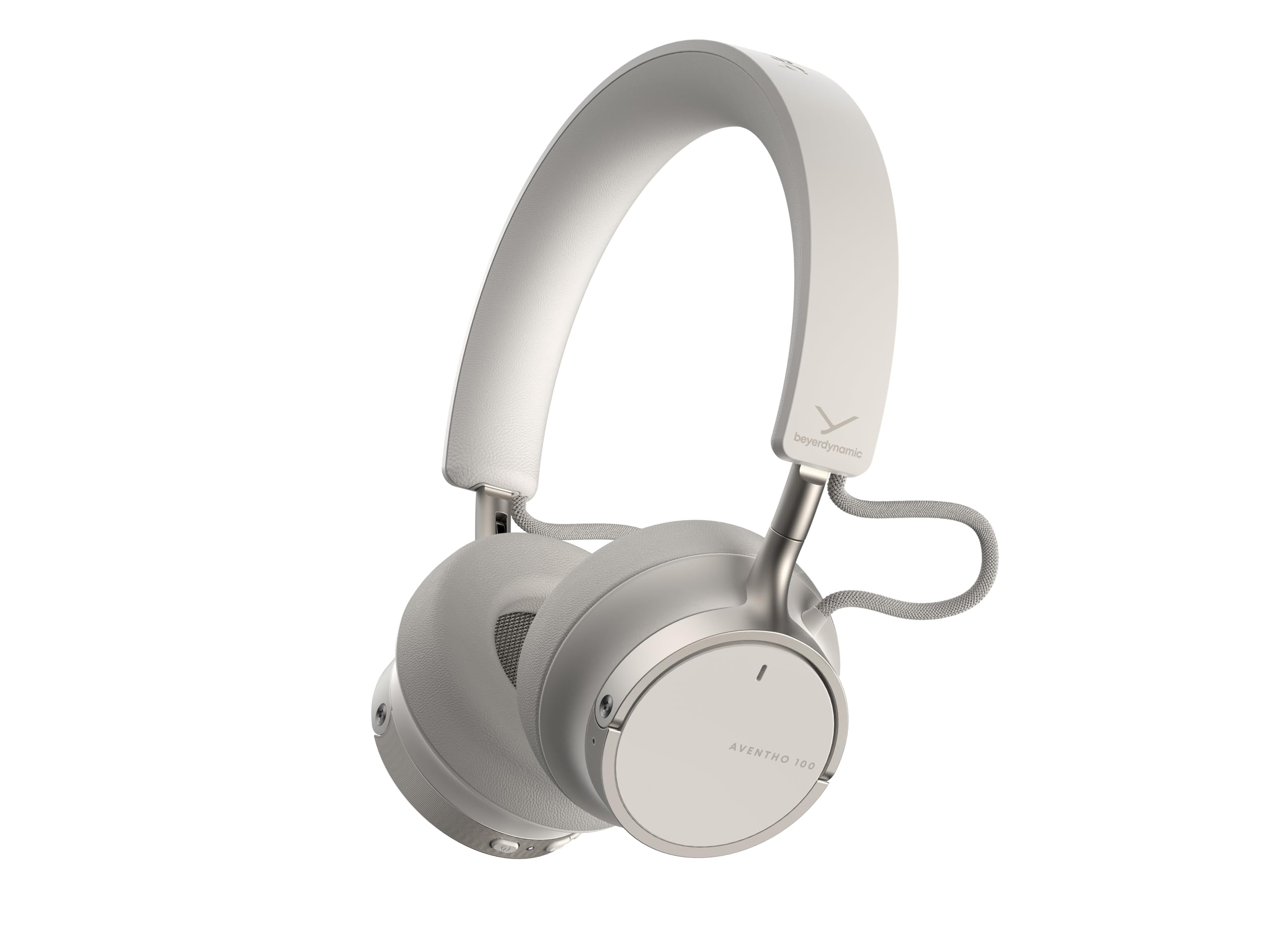
The beyerdynamic AVENTHO 100 is the only on-ear ANC headphone in this guide using planar magnetic drivers, a technology typically reserved for high-end open-back headphones. The planar magnetic design uses a thin diaphragm suspended between two magnetic arrays, which produces lower distortion at high volumes and faster transient response compared to conventional dynamic drivers. The result is exceptional detail retrieval in the treble and bass articulation that stays tight even at maximum ANC levels. The soundstage is wider than any dynamic-driver on-ear competitor, with precise instrument separation and accurate spatial placement.
ANC performance is good but not class-leading — the 60-hour battery life with active noise cancellation is impressive, but the cancellation depth is roughly 20–25 dB, compared to the 30 dB or more from dedicated ANC specialists. The transparency mode is effective for situational awareness without introducing artifacts. The foldable design uses premium materials including aluminum and durable textiles that give the headphones a luxury feel while keeping weight manageable. The carrying case is a protective hard shell that fits the folded headphones snugly.
Bluetooth 5.0 with multipoint connectivity supports seamless switching between devices, though the Google Fast Pair implementation for Android users is a welcome convenience. The app offers customizable EQ and ANC controls, though the 5-band EQ lacks the granularity of the JBL or Sennheiser apps. Comfort is generally good, but some users report that the ear pad cushioning is thinner than ideal — the planar magnetic driver requires a specific internal volume, which limits padding depth. For audiophiles who prioritize transient speed and detail over maximum ANC depth, the AVENTHO 100 is a compelling choice.
Why it’s great
- Planar magnetic drivers deliver ultra-low distortion and fast transients
- 60-hour battery life with ANC active is class-leading
- Premium materials (aluminum, textiles) for luxury feel and durability
- Google Fast Pair support for seamless Android connectivity
Good to know
- ANC depth (20–25 dB) trails dedicated ANC specialists
- Ear pad cushioning thinner than ideal due to driver volume requirements
- App EQ limited to 5 bands with less customization than competitors
7. Bose QuietComfort
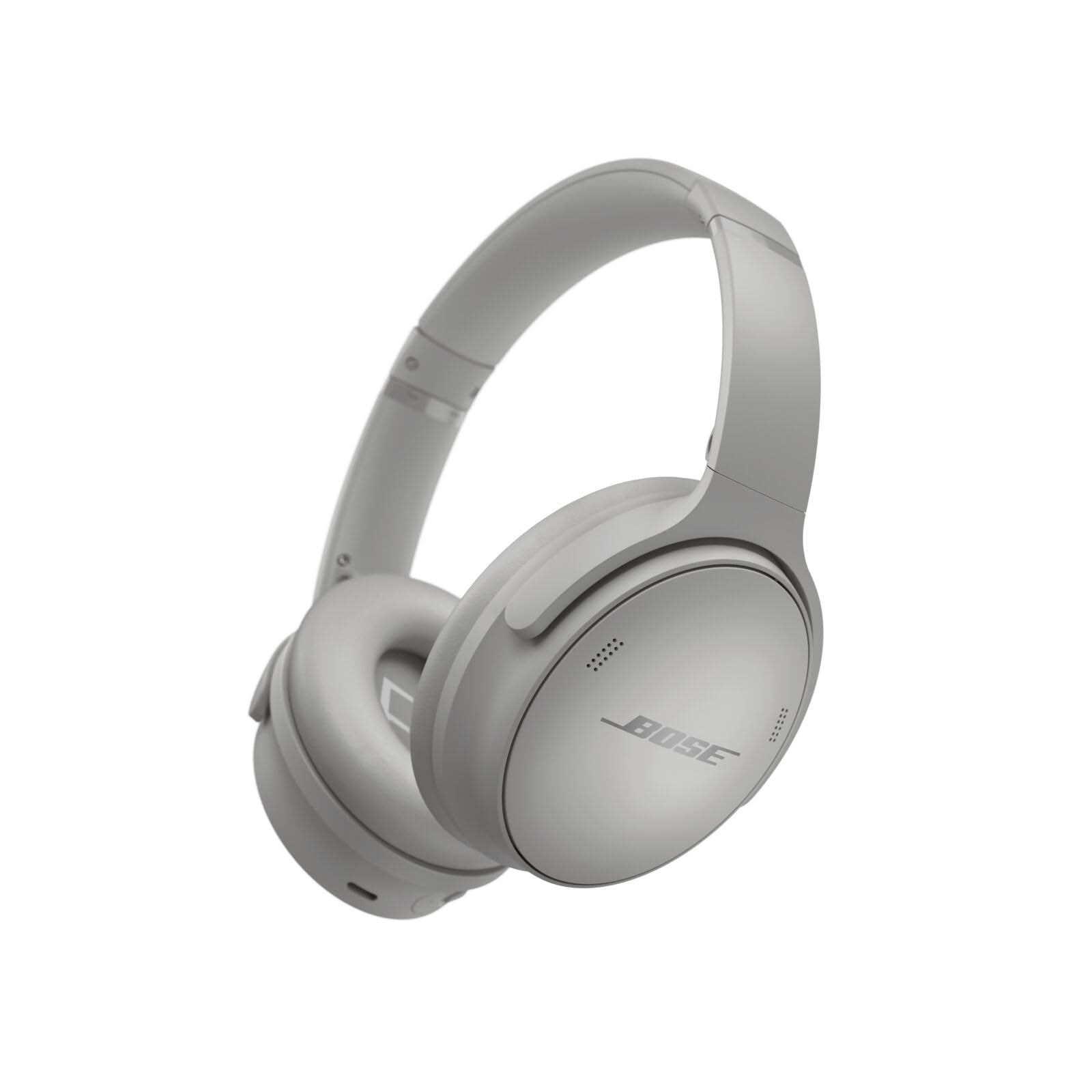
The standard Bose QuietComfort headphones deliver the core ANC technology from Bose at a lower price point than the Ultra series. The noise cancellation system uses the same basic architecture: Quiet Mode for full cancellation and Aware Mode for situational awareness. While the ANC isn’t as deep or adaptive as the CustomTune system in the Ultra, it still outperforms most competitors in this guide at blocking consistent low-frequency noise like airplane engines, HVAC systems, and refrigerator hums. Reviewers note that the ANC is particularly effective at smoothing out the frequency response — removing the low-frequency rumble that masks detail in music.
Sound quality benefits from the adjustable EQ in the Bose app, with controls for bass, mid-range, and treble. The default tuning is slightly warm with a bass emphasis that makes it forgiving of low-bitrate audio sources. The 24-hour battery life is modest compared to the 60-hour options in this guide, but the 15-minute charge delivers 2.5 hours of playback, which is sufficient for most daily use cases. The wired option via the included audio cable allows use even when the battery is depleted — a practical feature for long flights.
Comfort is where Bose traditionally shines, and the standard QuietComfort is no exception. The plush over-ear cushions and padded headband are designed for all-day wear, and the lightweight construction reduces fatigue during extended sessions. Multipoint Bluetooth supports seamless switching between two devices, and the Bose app provides firmware updates and additional feature access. The main compromise is the plastic build quality, which feels less premium than metal-reinforced competitors, and the slightly muddy bass response that some reviewers note before EQ adjustment.
Why it’s great
- Bose ANC technology blocks consistent low-frequency noise effectively
- Adjustable EQ in the Bose app for sound customization
- Plush over-ear cushions and lightweight build for all-day comfort
- Wired operation via audio cable when battery is depleted
Good to know
- 24-hour battery life is modest compared to 60-hour competitors
- Plastic build feels less premium than metal-reinforced options
- Bass sounds slightly muddy before EQ adjustment
8. Beats Solo 4

The Beats Solo 4 represents the latest iteration of Apple’s on-ear headphone line, featuring custom acoustic architecture with updated drivers for a more balanced sound signature than previous generations. The bass is still emphasized but no longer overwhelms the mids and highs — the tuning now sits closer to neutral than the classic Beats “V-shaped” sound. Personalized Spatial Audio with dynamic head tracking is supported on both iOS and Android devices, making the Solo 4 one of the most versatile options for immersive audio across platforms. The Flex-Grip headband and ergonomically angled, adjustable ear cups provide a stable fit that reduces slippage during movement.
Battery life is rated at up to 50 hours, and the Fast Fuel feature gives 5 hours of playback from a 10-minute charge — one of the best quick-charge specs in this guide. The UltraPlush ear cushions are designed for comfort and durability, though multiple reviewers note that the on-ear form factor can cause ear fatigue after about 20 minutes due to the tight clamping force before break-in. High-resolution lossless audio is supported via USB-C wired connection, which is a notable addition for Apple Music subscribers who want full-quality playback.
Call quality and voice assistant interaction are handled by a built-in microphone, and the Class 1 Bluetooth provides extended range and fewer dropouts compared to standard Class 2 Bluetooth found in most competitors. Dual compatibility with one-touch pairing for both iOS and Android ensures platform flexibility. The main criticism is that the Solo 4 lacks active noise cancellation — the “noise cancellation” mentioned in some reviews is actually passive isolation from the ear cups being pressed against the ears. This means in loud environments, users must increase volume to compensate, which may contribute to listening fatigue.
Why it’s great
- 50-hour battery life with Fast Fuel (10 min charge = 5 hours playback)
- Personalized Spatial Audio with dynamic head tracking on iOS and Android
- Class 1 Bluetooth for extended range and fewer dropouts
- High-resolution lossless audio via USB-C wired connection
Good to know
- No active noise cancellation — passive isolation only
- Clamping force causes ear fatigue for some listeners within 20 minutes
- Ear cups may cause sweating during extended wear or workouts
9. JLab Epic Work ANC

The JLab Epic Work ANC is designed specifically for office productivity, with a focus on call quality and extended battery life. The 90+ hours of wireless playtime is the highest in this guide, and the included charging hub provides convenient power management for desks or travel bags. The smart ANC blocks up to 30 dB of ambient noise — impressive for a budget-level entry — and the rotating adaptive ENC microphone delivers clear voice pickup with a quick mute button and “Hear Yourself” mode for monitoring your own voice during calls without echoing.
The on-ear form factor is designed for all-day wear in a work environment, with the “Be Aware” functionality letting you stay aware of critical ambient sounds like office announcements or approaching colleagues without removing the headset. Multipoint Bluetooth connectivity supports simultaneous pairing with PC, laptop, and mobile devices, with seamless switching between platforms. The JLab Work App provides EQ settings and ANC controls, though the customization depth is limited compared to premium apps. The 2-year warranty provides peace of mind for long-term reliability.
Audio quality is good for voice and music, with 40mm dynamic drivers delivering clear mids for speech reproduction. Bass response is moderate — sufficient for podcasts and conference calls but not punchy enough for bass-heavy music genres. The plastic build feels durable but not premium, and some reviewers note connectivity issues that require proper initial configuration to resolve. The included USB dongle is wide and may block adjacent ports on laptops; a USB extension cable or Bluetooth connection is recommended as a workaround. For the price, the microphone quality and battery life make the Epic Work ANC a strong choice for daily office use.
Why it’s great
- Exceptional 90+ hour battery life with convenient charging hub
- Rotating adaptive ENC mic with Hear Yourself mode for natural calls
- Smart ANC blocks up to 30 dB of ambient noise
- Multipoint Bluetooth for simultaneous connection to multiple devices
Good to know
- Bass response is moderate, not punchy for music enthusiasts
- USB dongle is wide and may block adjacent laptop ports
- Plastic build feels less premium than metal-reinforced options
FAQ
Why is ANC less effective on on-ear headphones compared to over-ear models?
What clamping force should I look for in on-ear ANC headphones for all-day wear?
Can I use on-ear ANC headphones with glasses without losing noise cancellation?
What is the difference between adaptive and fixed ANC, and which is better for on-ear headphones?
Final Thoughts: The Verdict
For most users, the best anc on-ear headphones winner is the Marshall Milton A.N.C. because it delivers the best overall balance of adaptive ANC, exceptional 80-hour battery life, spatial audio quality, and all-day comfort in a durable, foldable design. If you want the absolute deepest noise cancellation regardless of price, grab the Sony WH-1000XM6 with its QN3 processor and 12-microphone adaptive array. And for budget-conscious buyers who prioritize call quality and battery endurance for office use, nothing beats the JLab Epic Work ANC with its 90+ hour battery and smart ANC.