
Our readers keep the lights on and my morning glass full of iced black tea. As an Amazon Associate, I earn from qualifying purchases.
A basement window with a weak latch is a security risk you can fix yourself. You want a lock that keeps your family safe without making your home feel like a fortress. The trick is finding a window that gives you real anti-break-in features, lets in fresh air, and costs a reasonable amount.
I’m Min — the founder and writer behind Gadgets Feed. This guide is built by comparing the manufacturers’ published specifications and the patterns across verified customer reviews, so you get each pick’s real strengths and trade-offs instead of marketing spin.
Here are four basement windows that lock tight, hold up, and won’t cause installation headaches.
Quick Picks
- Vinyl Basement Hopper Window, 32″ x 18″ — Best Security
- Vinyl Basement Window, 32″ x 16″ Bathroom Sliding Window — Top Performer
- NOOTA Basement Window 32″ x 16″ Double Tempered Glass — Best Value
- NOOTA Basement Window 32″ x 14″ with Removable Mounting Flange — Budget Champion
How To Choose The Best Basement Windows For Security
The biggest mistake people make is buying the cheapest basement window they find without checking how it actually locks. A window held together by a flimsy latch is not a security window — it’s a weak point. Here is what to look for.
Double Tempered Glass Is Non-Negotiable
Standard glass shatters easily and creates a shower of dangerous shards — exactly what you do not want in a basement. Double tempered glass (two panes of heat-treated glass) is about four to five times stronger than normal glass and breaks into small pebbles rather than sharp daggers. Every window on this list uses it, which means none of them are the weak glass you see in a cheap shed window.
Lock Quality Over Lock Presence
Just because a window says it has a lock does not mean the lock works. Buyers on several basement windows have noted that the locks feel “funky” or “not secure,” which means an intruder could pop them open with little effort. Look for windows where the locking mechanism engages the frame on both the top and bottom tracks — a single-point latch on a sliding window can often be jimmied. If you see a review mentioning an iffy lock, that window probably needs an add-on lock to be truly secure.
Vinyl Frame Durability
Basements are damp environments. Wood frames rot and metal frames corrode over time. A premium vinyl PVC frame resists moisture, rust, and corrosion, meaning the window stays square and the lock stays aligned. A warped frame can make a good lock ineffective because the mating surfaces no longer meet. Every window here uses a vinyl frame, but the thickness and build quality vary noticeably between budget and premium picks.
Quick Comparison
On smaller screens, swipe sideways to see the full table.
| Model | Best For | Window Style | Glass Type | Weight | Amazon |
|---|---|---|---|---|---|
| Vinyl Hopper 32×18 | Maximum security + ventilation | Hopper (inward tilt) | Double-pane insulated | 21.6 lb | $119.99Amazon |
| Vinyl Sliding 32×16 | Best overall sliding security | Horizontal sliding | Double-pane tempered | 18.21 lb | $115.99Amazon |
| NOOTA Sliding 32×16 | Budget-friendly double glass | Horizontal sliding | Double tempered | 24.8 lb | $109.99Amazon |
| NOOTA Sliding 32×14 | Small rough openings on a budget | Horizontal sliding | Double tempered | — | $99.99Amazon |
In‑Depth Reviews
1. Vinyl Basement Hopper Window, 32″ x 18″
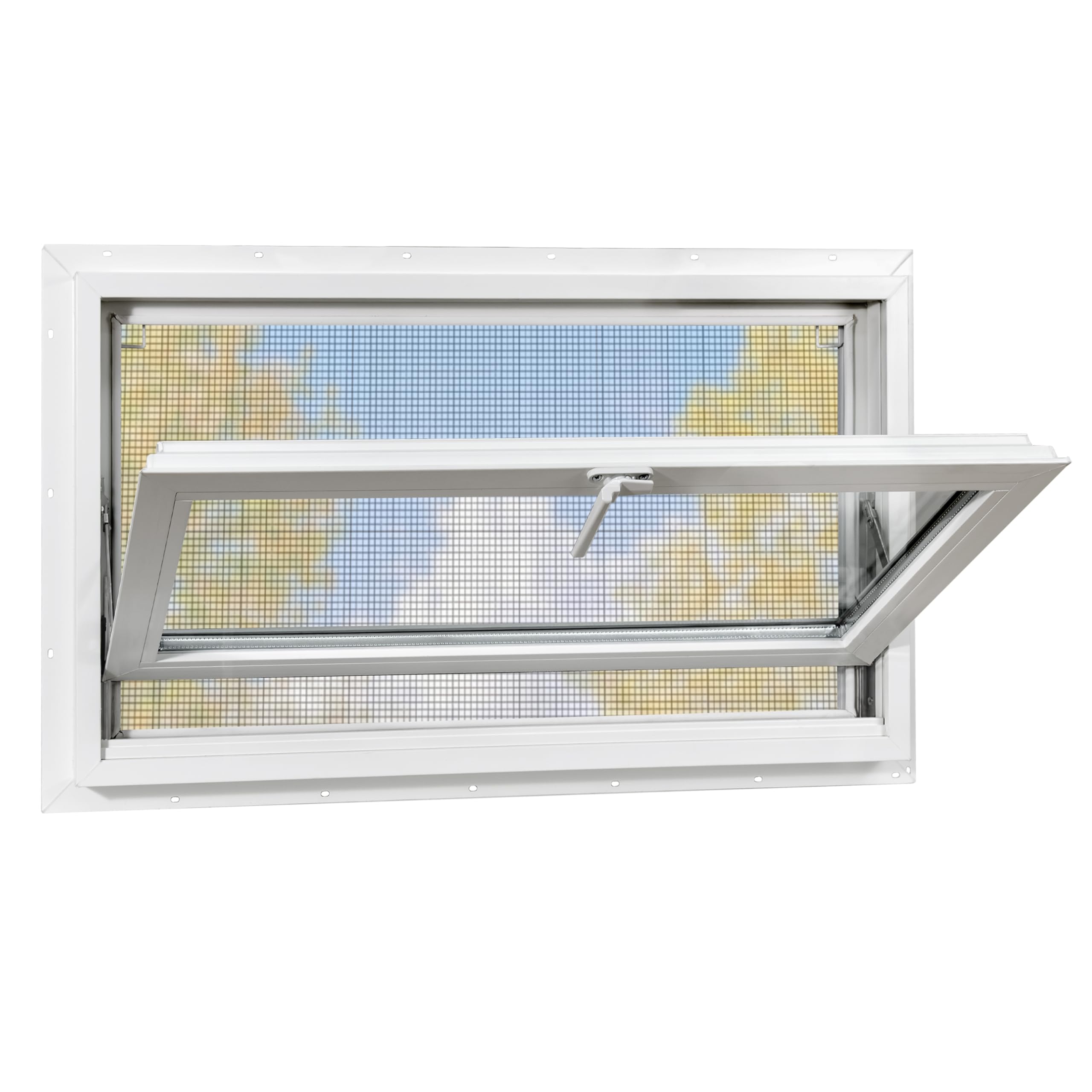
The hopper-style window gives intruders no leverage to pry it open.
Unlike the sliding windows on this list, this one opens inward on bottom hinges (hopper style), so there is no open track for someone to push up or slide sideways. The “tilt-in hopper design” lets you get fresh air while keeping the opening small and awkward to climb through. It also has a built-in fiberglass screen to keep out insects and rodents, so ventilation doesn’t mean an open hole.
The frame is 21.6 pounds of high-quality PVC (vinyl) that resists moisture, rust, and corrosion — critical for a below-grade basement installation where dampness is always a factor. One reviewer noted the frame felt a “little flimsy” but noted the window “works great vertical,” which suggests the structural weakness is minor. The biggest catch: the actual window measured 32 1/8 x 14 1/8 inches, which did not fit a standard 32 x 14 block opening, so measure your rough opening carefully before buying.
The overall appeal here is that a hopper window is fundamentally harder to force open than any sliding design. The locking mechanism engages more points, and the inward-swinging design means the frame sits tight against the wall. If security is your number-one priority, this design approach is the one to beat.
Why it’s great
- Inward-opening hopper design blocks forced entry better than sliders
- Double-pane insulated glass improves thermal efficiency and soundproofing
- PVC frame resists basement moisture and won’t rot or rust
- Built-in screen keeps bugs out while air flows in
Good to know
- Actual window size can be slightly larger than the labeled opening size — measure twice
- Frame construction feels a bit thin to some buyers
Best for: Homeowners who want a genuine security advantage from the window design itself, not just a latch on a slider.
Skip if: You have a standard 32×14 block rough opening — this window may not fit without modification.
2. Vinyl Basement Window, 32″ x 16″ Bathroom Sliding Window
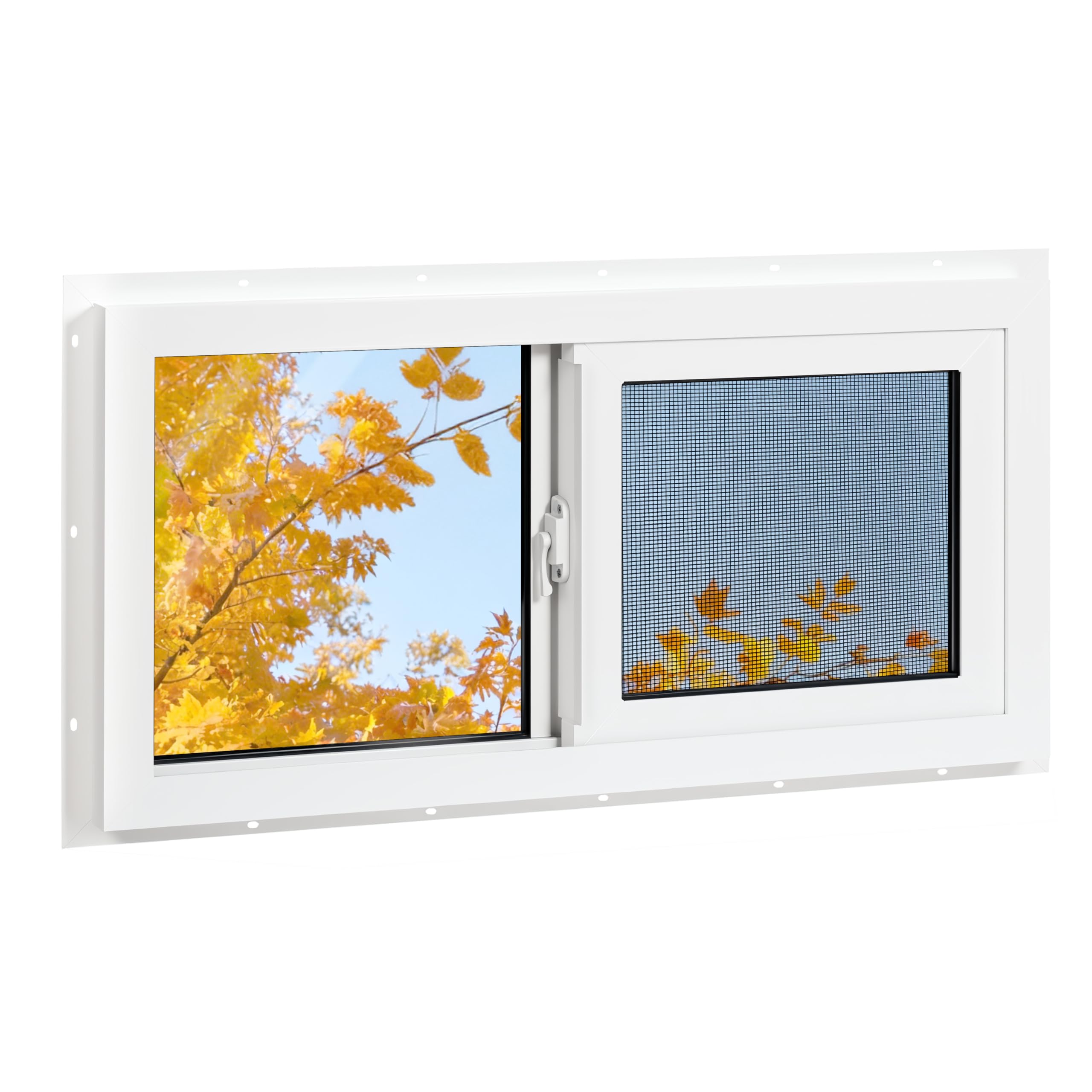
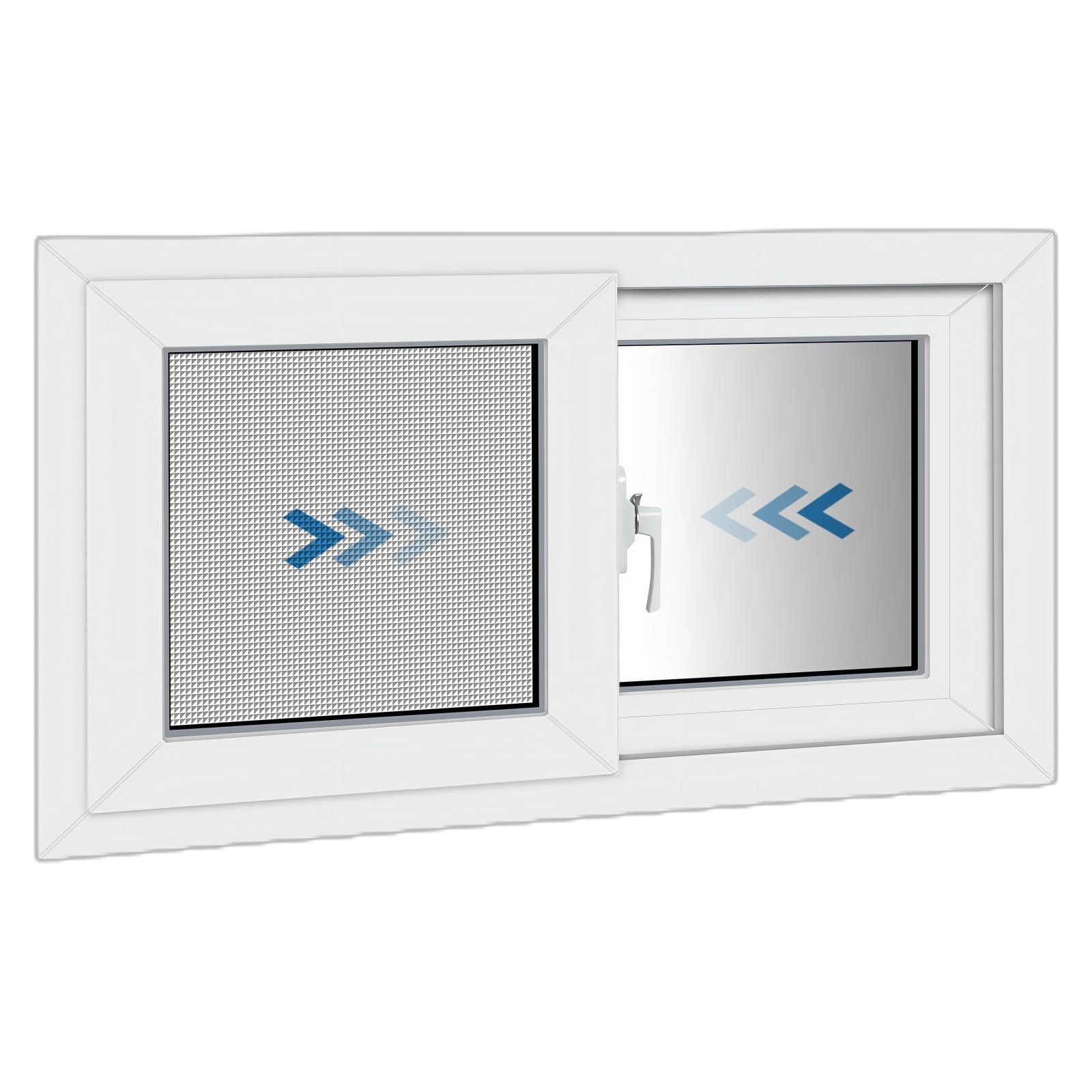
A sliding window that feels solid in your hands, unlike cheaper models.
At just 18.21 pounds, this is noticeably lighter than the NOOTA sliding window of the same size (which comes in at 24.8 pounds), making it easier to handle during installation. But lighter does not mean flimsy here — buyers describe it as having an “impressive finish” with “inside and outside corners pre-smoothed,” which means no sharp edges to cut you during installation or later use. The double-pane tempered glass (two sheets of heat-strengthened safety glass) gives you real impact resistance so a hard knock won’t shatter it into dangerous shards.
The horizontal slider moves on PVC-coated steel tracks (corrosion-resistant, smooth-rolling tracks) and uses “durable galvanized latches” for the lock. The big upgrade over cheaper windows: one buyer mentioned the slides “smoothly, weather tight,” and another noted it was “well made and square,” which means it seals properly and the lock aligns correctly. The minor annoyance: one package arrived two days late, though it was “well-packaged, undamaged.” If you have an older house with brick or cement framing, you may need to trim the lip to fit.
Where it leads on is finish quality and build consistency across the frame. The corners are pre-smoothed so you are not scraping your hands, and the weather-tight seal keeps drafts and moisture out. For the price point, this is the most well-rounded sliding security window on the list.
Why it’s great
- Pre-smoothed corners and weather-tight seal for a polished installation
- Double-pane tempered glass gives real impact resistance against shattering
- Galvanized latches offer a solid lock that engages positively
- Well-packaged and arrives square — no warping out of the box
Good to know
- Old houses with cement or metal framing may require trimming the lip
- Sliding windows are inherently more vulnerable to forced entry than hopper designs
Best for: Buyers who want the best finish and ease of installation in a sliding window without paying for a premium hopper design.
Skip if: You need the absolute toughest entry-resistance — sliding windows are easier to force up than a hopper.
3. NOOTA Basement Window 32″ x 16″ Double Tempered Glass
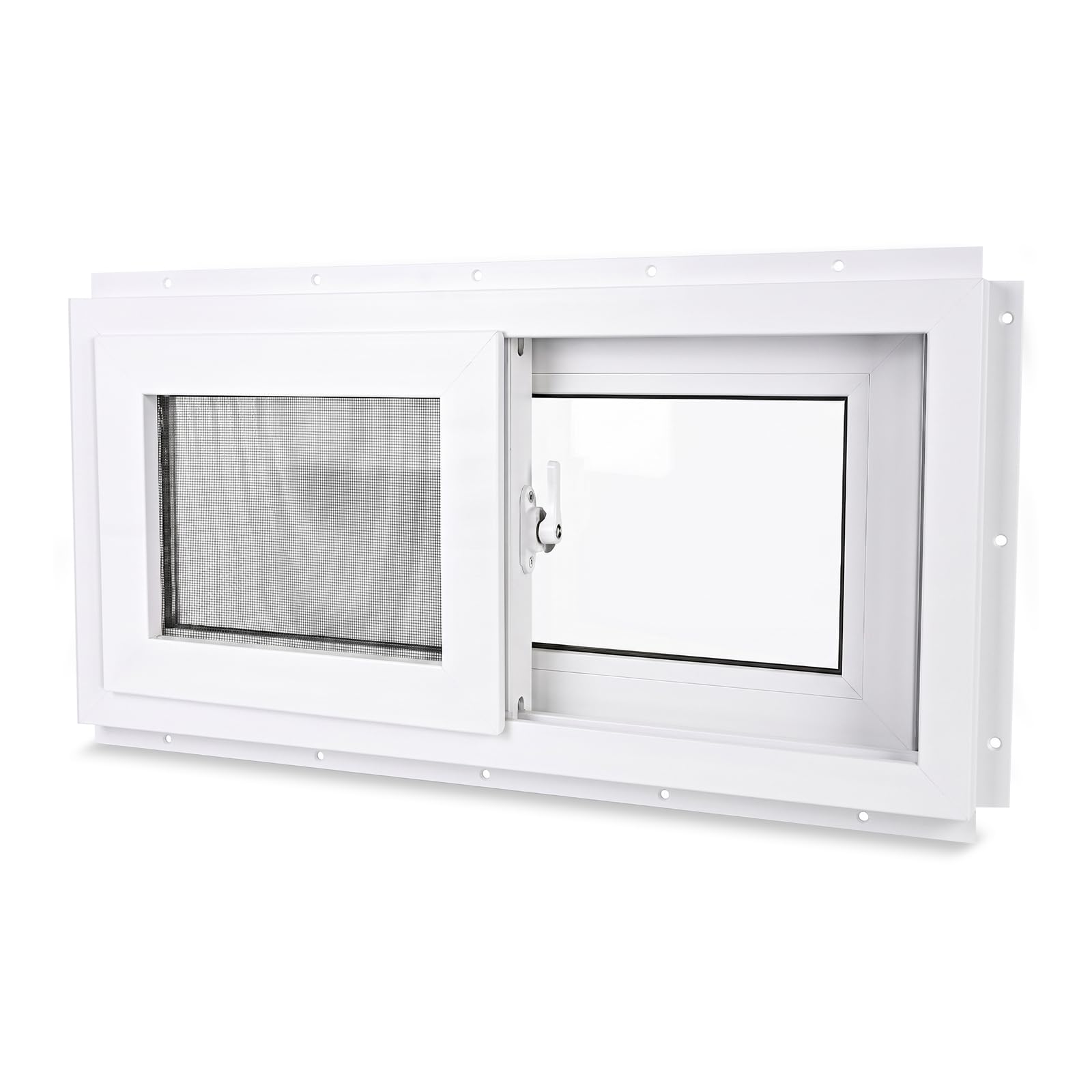
The heaviest frame in this guide, built to resist abuse from kids or intruders.
At 24.8 pounds, this NOOTA window is a full 6.6 pounds heavier than the premium vinyl sliding window of the same dimensions — that extra heft comes from thick vinyl and double tempered glass that buyers report “holds up against kids.” The removable mounting flange (a separate frame piece that screws into the opening) gives you two installation paths: use the flange for concrete walls or remove it for framed wooden openings. One owner reported the dimensions were “accurate 32×14” and that the window “fits and locks on top track, not bottom,” which is a meaningful security detail because a lock on the top track is much harder to reach and pop open from outside.
The catch is that the lock mechanism itself has drawn mixed feedback. Reviewers call the lock “funky” and note it feels “not secure,” with one buyer pointing out the “lock not secure; need add-on lock.” That is a real security gap: the window physically prevents opening because it locks on the top track, but the latch itself feels cheap. The included installation guide also lacks US flashing codes (instructions for waterproofing in cold climates), so one buyer warned there is a “risk water damage if only caulking.”
For the price, you get a very solid vinyl frame with real double tempered glass that can take a beating. The removable flange also makes this an easy install for concrete basement walls where framed windows won’t fit. Just plan on adding a supplemental lock and using your own weatherproofing method.
Why it’s great
- 24.8 pounds of thick vinyl and tempered glass — the heaviest frame here, hardest to break through
- Removable flange lets you install in concrete or framed openings with the same window
- Top-track lock makes it harder for intruders to reach and disengage from outside
- Owners mention it holds up well against repeated use and rough treatment
Good to know
- Built-in lock feels flimsy — you will want an add-on security lock
- Installation guide lacks proper US weatherproofing instructions for cold climates
Best for: Homeowners with concrete basement walls who want a heavy, abuse-resistant frame at a mid-range price.
Skip if: You don’t want to buy a separate lock to feel truly secure.
4. NOOTA Basement Window 32″ x 14″ with Removable Mounting Flange
The budget-friendly choice that still gives you impact-resistant glass.
The smaller 32×14 sibling of the NOOTA above, this one shares the same removable flange design and double tempered glass construction at a lower price. That means you still get the impact-resistant glass that won’t shatter into dangerous shards, and the same flexible installation in framed or concrete openings. Multiple customers note it fits “accurate 32″x14″ dimensions” and call it a “great buy” — one customer liked it so much they “ordered second.” The lock also engages on the top track here, giving a slight security advantage over bottom-latching sliders.
The downside is similar to the larger NOOTA. A detailed buyer review noted “deep blemishes on interior slider” and found the lock “not secure.” The same review warned the basic directions “lack US code” and said there is “risk water damage if only caulking.” The screen is on the inside, which some buyers considered “non-standard.” For the price, you need to accept that this window is built to a lower finish standard — it functions well and slides easily, but the cosmetics and security hardware are budget-tier.
For a spare basement room, a workshop, or a storage area where you want basic security and double tempered glass without spending much, this gets the job done. Pair it with a simple add-on window security bar or a keyed lock and you solve the main weakness.
Why it’s great
- Double tempered glass without the premium price tag
- Removable flange fits both concrete and framed openings
- Buyers confirm accurate dimensions and easy sliding operation
- Multiple customers ordered a second one, indicating good repeat value
Good to know
- Finish quality is rough — some units have blemishes on the interior slider
- Lock feels insecure; needs an aftermarket add-on lock for real security
- Flashing and waterproofing instructions are missing, so plan your own sealing method
Best for: Budget-conscious buyers who still want tempered glass and a removable flange for concrete installations.
Skip if: You want a window that is truly secure out of the box without buying extra hardware.
Understanding the Specs
Double Tempered Glass
This means two panes of glass that have been heat-treated to be about four to five times stronger than regular glass. When it does break, it crumbles into small blunt pebbles instead of sharp daggers. For a basement window, this is the single most important feature: it makes the window hard to smash through and safer for the room’s occupants — no one wants a kid to run into a window and get cut by shards.
Removable Mounting Flange
A flange is a raised edge around the window frame that creates a flat surface for screws and sealant. On these NOOTA windows, the flange can be removed, which means you can install the window into a concrete block opening (where the flange would get in the way) or into a standard framed wooden opening (where the flange helps with weatherproofing). If you have poured concrete basement walls, a removable flange is a standout.
Hopper Window vs Sliding Window
A hopper window swings inward from the bottom (like a trapdoor hinged at the bottom edge), which creates a much smaller opening and makes it nearly impossible for someone to climb in. A sliding window moves sideways on a track, which is simpler and cheaper but leaves a large open gap that can be forced. For security, hopper wins. For ease of installation and cost, sliding wins. Pick based on which trade-off matters more to your home.
Double-Pane vs Double Tempered Glass
Don’t mix these up. Double-pane just means two panes of glass with an air gap for insulation. Double-pane tempered means those two panes are both heat-strengthened safety glass. A standard double-pane window that is not tempered offers better insulation but breaks easily. A double tempered glass window offers insulation plus serious break resistance. All four windows here use tempered construction, which is what you need for security.
FAQ
Will a sliding basement window keep a burglar out?
What size basement window do I need for my rough opening?
Can I install a basement window myself?
What is the difference between a hopper window and a casement window for basements?
How much ventilation does a basement hopper window provide?
Are vinyl basement windows better than aluminum for security?
Will tempered glass basement windows prevent break-ins?
What is the best lock to add to a basement window for extra security?
Can I use a standard basement window in an egress window well?
Why do some basement windows have a screen on the inside?
Final Thoughts: The Verdict
For most people, the basement windows for security winner is the Vinyl Basement Hopper Window, 32″ x 18″ because its inward-opening hopper design is fundamentally harder to force open than any sliding window, and the double-pane insulated glass handles both security and energy efficiency. If you want the best finish and easiest installation in a sliding format, grab the Vinyl Basement Sliding Window, 32″ x 16″. And for a budget-friendly tempered glass option that works in concrete walls, NOOTA 32″ x 16″ is your pick — just add your own lock.
How We Picked
We do not accept paid placement, and we did not hands-on test every unit. Instead, we match each pick to a real buyer and use-case by comparing the manufacturers’ published specifications against the patterns in verified customer reviews — so you get each pick’s real strengths and trade-offs instead of marketing copy.
Sources & Methodology
Specifications: manufacturer listings and product documentation. Review insights: verified customer reviews, as of June 2026. Pricing: not shown on this page (it changes often); check the current price via the retailer link.
As an Amazon Associate, Gadgets Feed earns from qualifying purchases. This does not affect which products we feature.
Product prices and availability are accurate as of the date/time indicated and are subject to change. Any price and availability information displayed on Amazon at the time of purchase will apply to the purchase of this product. As an Amazon Associate I earn from qualifying purchases.
CERTAIN CONTENT THAT APPEARS ON THIS SITE COMES FROM AMAZON. THIS CONTENT IS PROVIDED "AS IS" AND IS SUBJECT TO CHANGE OR REMOVAL AT ANY TIME.
Amazon and the Amazon logo are trademarks of Amazon.com, Inc. or its affiliates.