
Every wildlife photographer knows the frustration: you spot a majestic bird or a distant buck, but your lens falls short, delivering a blurry speck in the frame. The gap between what you see and what your camera captures is measured in millimeters of focal length and milliseconds of autofocus speed, and bridging that gap without emptying your savings is the real challenge. This guide cuts through the noise to find the bodies that deliver sharp, detailed images of skittish subjects on a realistic budget.
I’m Min — the co-founder and writer behind Gadgets Feed. I’ve spent countless hours analyzing sensor performance, burst rates, and autofocus systems across dozens of models to identify which affordable bodies genuinely serve the wildlife shooter, not just the spec sheet warrior.
After rigorous analysis of autofocus algorithms, ISO noise floors, and real-world burst capabilities, we’ve assembled the definitive ranking of the best affordable camera for wildlife photography that keeps your subject in sharp focus and your budget intact.
How To Choose The Best Affordable Camera For Wildlife Photography
Choosing a camera for wildlife is different from picking one for portraits or landscapes. Your subject is usually far away, often moving, and frequently operating in low light at dawn or dusk. Three technical pillars determine success in this specific niche: autofocus capability, reach (crop factor and lens ecosystem), and burst speed with buffer depth.
Autofocus: The Decisive Spec
For a stationary bird on a branch, any modern camera can focus. For a bird taking flight, you need phase-detection autofocus with subject tracking. Look for bodies with dedicated animal or bird eye-detection modes. The number of autofocus points matters less than how well the system sticks to a moving subject. Hybrid systems that combine phase and contrast detection offer the best reliability when a branch or grass blade briefly obscures your target.
Sensor Size and Effective Reach
A crop-sensor (APS-C) body gives you a 1.5x or 1.6x magnification factor on any lens you mount. A 300mm lens becomes a 450mm equivalent on APS-C, delivering more reach per dollar. Full-frame sensors offer superior dynamic range and low-light performance but require longer (and pricier) lenses to achieve the same framing. For the budget wildlife shooter, APS-C often provides the best value-to-reach ratio.
Burst Rate and Buffer
Wildlife action happens in fractions of a second. A burst rate of at least 8 frames per second (fps) is the baseline for capturing a bird taking off or a predator sprinting. But burst rate is useless without a deep buffer — the camera’s ability to keep shooting while writing data. Look for a buffer that can hold at least 30 raw frames at your chosen burst rate before the camera slows down.
Quick Comparison
On smaller screens, swipe sideways to see the full table.
| Model | Category | Best For | Key Spec | Amazon |
|---|---|---|---|---|
| Canon EOS R7 | Mirrorless APS-C | Action & Bird Photography | 30 fps burst / 32.5 MP | Amazon |
| Nikon Z50 II | Mirrorless APS-C | Versatile Travel Kit | 2-lens kit / 20.9 MP | Amazon |
| Canon EOS RP | Mirrorless Full-Frame | Entry Full-Frame Value | 26.2 MP / Eye AF | Amazon |
| Nikon D7500 | DSLR APS-C | Budget Bundle Deal | 51-Point AF / 8 fps | Amazon |
| Sony a7 III | Mirrorless Full-Frame | Low-Light Wildlife | 693 AF Points / 10 fps | Amazon |
| Fujifilm X-T30 III | Mirrorless APS-C | Stylish Everyday Carry | AI Subject Detection | Amazon |
| Sony RX100 VII | Compact 1-inch | Pocket-Sized Travel | 24-200mm / 20 fps | Amazon |
| Panasonic Lumix ZS99 | Compact Travel | Maximum Portability | 30x Zoom / 24-720mm | Amazon |
| Panasonic Lumix FZ80D | Bridge Camera | Ultra-Telephoto on a Budget | 60x Zoom / 1200mm | Amazon |
| Canon EOS 5D Mark IV | DSLR Full-Frame | Professional Workhorse | 30.4 MP / 7 fps | Amazon |
| Canon EOS R5 | Mirrorless Full-Frame | Ultimate Performance | 45 MP / 20 fps | Amazon |
In‑Depth Reviews
1. Canon EOS R7 Mirrorless Camera

The Canon EOS R7 is the definition of a modern wildlife body that doesn’t compromise on the features that matter most. Its 32.5-megapixel APS-C sensor delivers a massive 1.6x crop factor, turning a standard 100-400mm lens into a 160-640mm reach without carrying a super-telephoto brick. The Dual Pixel CMOS AF II system with 651 zones covers nearly 100% of the frame, and its subject detection specifically tracks animals and birds with tenacious accuracy.
The burst performance is genuinely impressive for its tier: 15 fps with the mechanical shutter and 30 fps with the electronic shutter, both with full autofocus and auto-exposure tracking. The RAW Burst Mode with a half-second pre-shooting buffer means you can press the shutter after the action starts and still capture the frame before it. The 5-axis In-Body Image Stabilization (IBIS) cranks up to 8 stops of correction, a lifesaver for handheld telephoto shots in fading evening light.
User reviews consistently praise the autofocus as “sticking to subjects like super glue” and the buffer depth as sufficient for extended action sequences. The dual SD card slots (one UHS-II) provide redundancy in the field. While the RF mount requires an adapter for older EF lenses, the performance benefits of native glass are tangible. The battery life, rated at over 500 shots per charge with a single LP-E6NH pack, comfortably covers a full morning shoot.
Why it’s great
- Excellent subject detection AF for birds and animals
- High burst rates with deep buffer for action sequences
- Effective IBIS for handheld telephoto shooting
Good to know
- Body-only; requires investment in RF or adapted EF lenses
- Electronic viewfinder refresh can lag slightly in fast panning
2. Canon EOS R5 Mirrorless Camera

The Canon EOS R5 pushes the boundaries of what’s possible in a mirrorless body, with a 45-megapixel full-frame sensor that allows for massive cropping without losing detail. For wildlife, that resolution means a 400mm shot can be cropped to a tight 800mm equivalent with enough pixels left for a sharp 4K export. The DIGIC X processor drives the Dual Pixel CMOS AF II with 1,053 AF points and deep-learning-based subject tracking that includes dedicated detection for animals, birds, and even vehicles.
The burst rate of 12 fps mechanical and 20 fps electronic leaves very few action gaps. The AF tracking is renowned for being “lightning fast” with “minimal lag,” and the eye detection for birds is particularly praised for locking onto small, fast-moving subjects against cluttered backgrounds. The 5-axis IBIS provides up to 8 stops of correction, making it possible to shoot handheld with a 600mm lens at surprisingly slow shutter speeds.
User feedback from wildlife shooters notes that the 45-megapixel files are demanding on storage and processing, but the image quality payoff is substantial. High ISO performance is clean up to ISO 10000, which is critical for dawn and dusk shoots. The battery life of about 650 shots per charge is adequate but less than DSLR counterparts, so packing a spare is wise for full-day outings. The R5 is an investment, but for the dedicated wildlife enthusiast, the AF precision alone justifies the leap.
Why it’s great
- Extraordinary eye-detect AF for birds and mammals
- 45MP sensor allows severe cropping for extra reach
- Excellent IBIS and high ISO handling for low-light action
Good to know
- High-resolution files require fast memory cards and storage space
- Battery life is shorter than DSLR alternatives
3. Sony a7 III Full-Frame Mirrorless

The Sony a7 III remains a benchmark for value in the full-frame mirrorless world, and its wildlife credentials are substantial. The 24.2-megapixel back-illuminated sensor offers 15 stops of dynamic range and a native ISO range that extends to 204,800, giving it a clear advantage in the low-light conditions wildlife photographers regularly face. The 693 phase-detection autofocus points cover 93% of the image area, and the Real-time Eye AF for both humans and animals delivers reliable tracking.
Shooting at 10 fps with continuous autofocus and auto-exposure is fast enough for most wildlife scenarios, and the deep buffer allows for over 100 consecutive shots before slowdown. The battery life is exceptional for a mirrorless body, often lasting a full day of intermittent shooting on a single NP-FZ100 pack. The 28-70mm kit lens is a good starting point, but the real power of the a7 III for wildlife comes from pairing it with Sony’s 200-600mm or adapted third-party telephoto lenses.
Community feedback highlights the “excellent value” and “amazing image quality” of the a7 III, with many users reporting that its 2018-era specs still outperform newer competitors in real-world shooting. The menu system is complex but highly customizable once set. The body lacks the high burst rates and dedicated bird AF modes of newer cameras, but its combination of full-frame sensitivity, reliable tracking, and affordability makes it a smart choice for wildlife shooters prioritizing low-light performance over raw speed.
Why it’s great
- Excellent high-ISO performance for dawn/dusk shooting
- Long battery life for extended field sessions
- Solid full-frame image quality at an accessible price
Good to know
- No dedicated bird or animal AF mode (works via Real-time Eye AF)
- Burst rate of 10 fps is adequate but not class-leading
4. Canon EOS 5D Mark IV DSLR
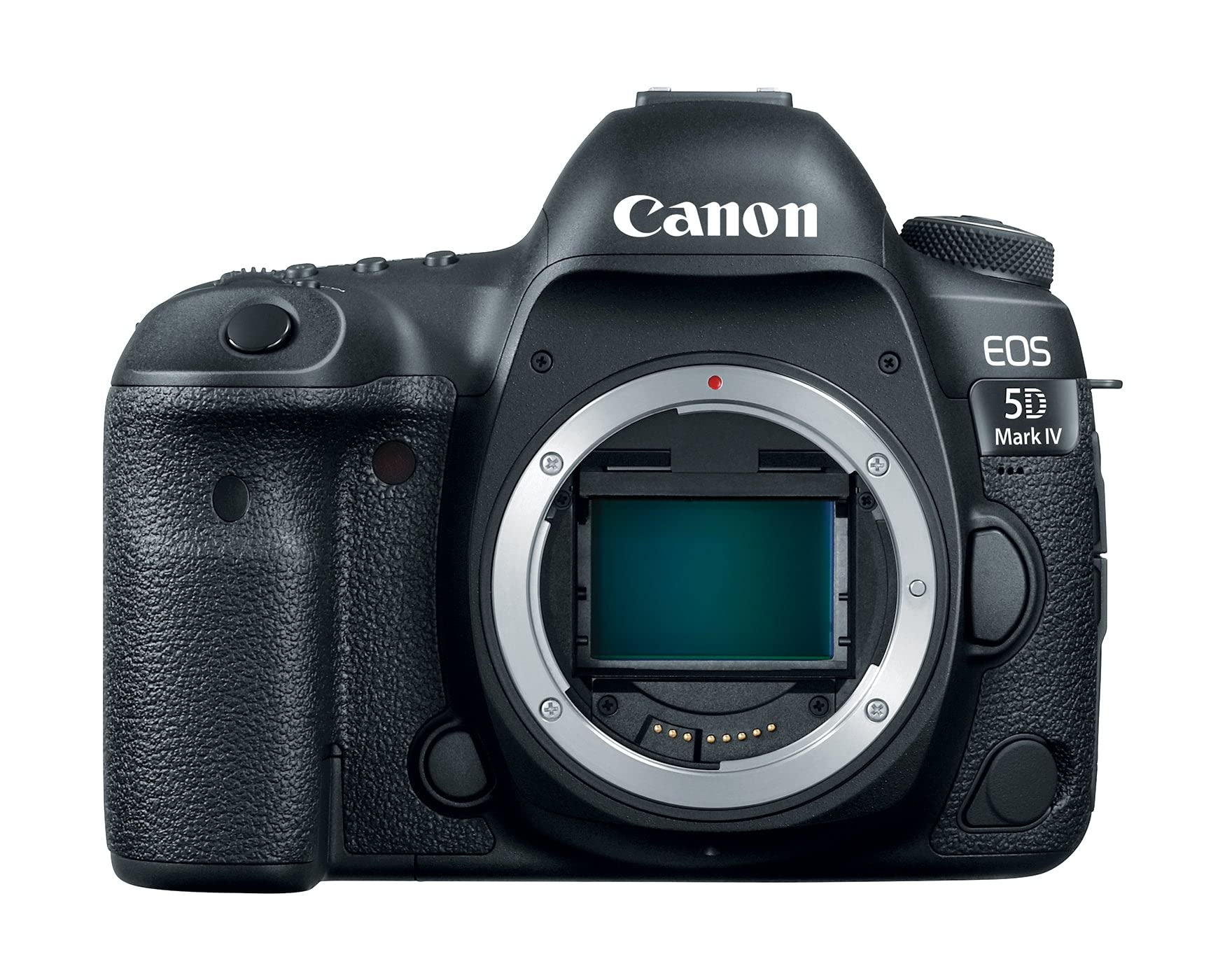
The Canon EOS 5D Mark IV is a professional workhorse that has defined wildlife and action photography for years. Its 30.4-megapixel full-frame sensor offers a great balance of resolution and noise performance, and the DIGIC 6+ processor enables a continuous shooting speed of 7 fps with a buffer deep enough for extended RAW sequences. The 61-point autofocus system, while not as dense as modern mirrorless arrays, is fast and reliable, with excellent subject tracking capabilities in AI Servo mode.
The dual-pixel CMOS AF during live view provides responsive focus for video and stills, and the large optical viewfinder gives a clear, lag-free view of fast-moving subjects — something many mirrorless shooters still prefer. The built-in GPS for geotagging is a boon for wildlife researchers and photographers who need location data. The 5D Mark IV also offers excellent battery life, often lasting multiple days on a single charge with conservative use.
Users upgrading from the 5D Mark III praise the improved dynamic range and high-ISO performance, noting that “ISO 1600 is nearly noise-free” and “shadow recovery is on another level.” The robust weather sealing inspires confidence in rain or dust. The main trade-off is the lack of in-body stabilization and the slower burst rate compared to modern mirrorless bodies. However, for photographers who prefer the optical viewfinder and proven DSLR reliability, the 5D Mark IV remains a compelling wildlife tool.
Why it’s great
- Excellent build quality and professional weather sealing
- Great dynamic range and high-ISO performance
- Optical viewfinder with no lag for fast action
Good to know
- 7 fps burst rate is slower than mirrorless competitors
- No in-body image stabilization
5. Nikon Z50 II with Two Lenses

The Nikon Z50 II is a compact, APS-C mirrorless system that punches above its weight for wildlife, especially with its two-lens kit. The 16-50mm f/3.5-6.3 VR handles landscapes and environmental shots, while the 50-250mm f/4.5-6.3 VR provides a 75-375mm equivalent reach in full-frame terms. This dual-lens setup covers most wildlife scenarios from close-up macro to moderate telephoto without needing to swap to a larger body.
The 20.9-megapixel DX-format sensor is paired with the EXPEED 7 processor, delivering a robust 11 fps burst rate. The autofocus system includes 231 phase-detection points with subject tracking that automatically detects people, dogs, cats, birds, and vehicles. The dedicated bird mode in the AF suite is a specific advantage for avian photographers. The Picture Control button offers 31 built-in presets, allowing users to dial in a look that mimics classic film styles or enhances specific colors for wildlife subjects.
Users describe the Z50 II as a “light and compact travel kit” that “fills a niche” for those wanting a capable system without the weight of full-frame gear. The built-in electronic VR and 4K/60p video capabilities add versatility for capturing wildlife behavior in motion. The SnapBridge app simplifies transferring images for quick sharing. The smaller sensor and consumer-grade lens apertures mean it struggles in very low light, but for daytime and golden-hour wildlife, the Z50 II delivers impressive image quality in a genuinely portable package.
Why it’s great
- Compact and lightweight for extended field use
- Two-lens kit provides versatile zoom range
- Dedicated bird detection autofocus mode
Good to know
- Smaller sensor and kit lenses limit low-light performance
- Menu system has a learning curve for new Nikon users
6. Canon EOS RP Full-Frame Mirrorless

The Canon EOS RP is the most affordable entry point into full-frame mirrorless photography, and for wildlife shooters on a budget, it offers a clear path to the benefits of a larger sensor. The 26.2-megapixel sensor delivers excellent dynamic range and low-light performance compared to any APS-C body in its price bracket. The RF 24-105mm f/4-7.1 IS STM kit lens provides a versatile zoom range with up to 5 stops of optical image stabilization, making handheld shots at slower shutter speeds feasible.
The autofocus system uses Dual Pixel CMOS AF with face and eye detection, which works well for larger mammals in decent light. The burst rate of 5 fps is modest, so this camera is better suited to stationary or slow-moving wildlife rather than birds in flight or fast action. The compact and lightweight body design makes it easy to carry on long hikes. The touchscreen interface is intuitive, and the menu system is one of the most user-friendly among interchangeable lens cameras.
User reviews consistently note that the EOS RP is “a fantastic way to get into full-frame without breaking the bank” and that “photos have more depth and fine detail than APS-C.” The RF mount compatibility with Canon’s growing lens lineup means you can upgrade glass over time without changing systems. The main caveats are the slow burst speed and the lack of a dedicated animal eye AF mode. For a wildlife photographer capturing portraits of large animals at dawn or dusk, the EOS RP’s sensor quality is a strong value proposition.
Why it’s great
- Most affordable full-frame mirrorless option
- Excellent image quality and low-light performance
- Compact, lightweight design for travel
Good to know
- 5 fps burst rate is too slow for fast action
- No dedicated animal or bird AF tracking mode
7. Sony RX100 VII Compact Camera
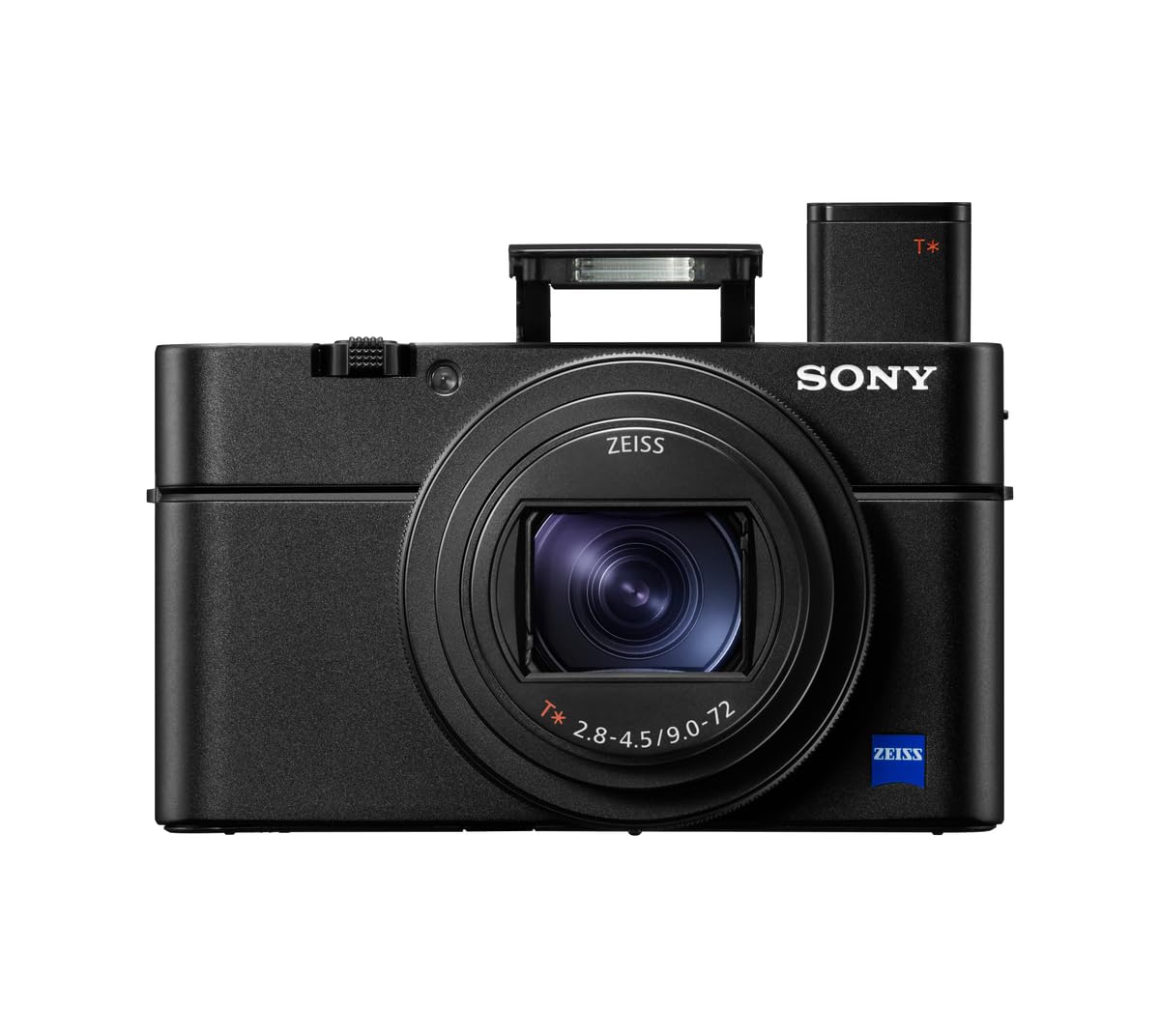
The Sony RX100 VII packs an astonishing amount of technology into a jacket-pocket-size body. The 1-inch stacked CMOS sensor delivers 20.1 megapixels with a Zeiss Vario-Sonnar T* 24-200mm f/2.8-4.5 zoom lens, giving a useful 8.3x optical zoom range that covers wide landscapes to moderate telephoto. The 0.02-second autofocus speed with 357 phase-detection points and 425 contrast-detection points is among the fastest in any compact camera.
The killer feature for wildlife is the blackout-free 20 fps continuous shooting with real-time tracking and Eye AF for both humans and animals. The 24-200mm lens, while not as long as dedicated wildlife setups, is sufficient for large mammals in reserves, birds at feeders, and zoo animals. The active mode image stabilization works well for handheld 4K video, allowing you to capture behavior clips without a tripod. The microphone jack is a bonus for recording nature sounds.
Users call it “well worth the pricetag” for its combination of image quality and portability. The compact size allows you to keep it in a pocket ready for unexpected wildlife encounters. The main limitation is the lens reach — at 200mm, you cannot photograph distant birds or small mammals without cropping significantly. Low-light performance also suffers compared to larger sensors. For the traveler or casual wildlife enthusiast who prioritizes carrying a camera everywhere, the RX100 VII is a premium compact companion.
Why it’s great
- Pocket-sized form factor is always with you
- Very fast autofocus with animal eye detection
- Blackout-free 20 fps burst for capturing fleeting moments
Good to know
- 24-200mm lens is short for distant wildlife
- 1-inch sensor struggles in very low light compared to larger formats
8. Fujifilm X-T30 III Mirrorless

The Fujifilm X-T30 III is a compact, characterful camera that excels in the field for wildlife enthusiasts who also value style. Its 26.1-megapixel X-Trans CMOS 4 sensor with the X-Processor 4 delivers excellent image quality with Fujifilm’s renowned color science. The AI-powered subject detection autofocus includes animal and bird detection, which is surprising and welcome at this price point. The 13-33mm kit lens provides a wide-to-short-telephoto equivalent of about 20-50mm in full-frame terms.
The camera’s burst rate of 8 fps with the mechanical shutter or 20 fps with the electronic shutter is adequate for many wildlife scenarios. The film simulations, including Velvia and Provia, offer in-camera color grading that reduces post-processing time for social media or print. The compact body design with tactile dials makes it a joy to use in the field, allowing quick changes to shutter speed, ISO, and exposure compensation without diving into menus.
Users love it as a “cute style” camera that “takes great photos” and serves as both a point-and-shoot for beginners and a manual control camera for enthusiasts. The AF system is responsive and the image quality is praised out of the box. The main limitation for wildlife is the short kit lens — you will need to invest in longer Fujinon telephoto lenses (like the 70-300mm or 100-400mm) to get serious reach. The smaller buffer can also fill up quickly during sustained 20 fps bursts.
Why it’s great
- Excellent color science and film simulations
- AI subject detection includes bird and animal modes
- Compact, stylish, and intuitive control layout
Good to know
- Kit lens is too short for most wildlife; requires dedicated telephoto lens
- Buffer depth is limited during high-speed bursts
9. Nikon D7500 DSLR with Dual Lenses

The Nikon D7500 is a tried-and-true DSLR that, when bundled with the 18-55mm VR and 70-300mm VR lenses, creates a complete wildlife kit at a very accessible price. The 20.9-megapixel DX-format sensor works with the EXPEED 5 processor to deliver clean images up to ISO 3200 and solid dynamic range. The Multi-CAM 3500FX II autofocus module provides 51 points, including 15 cross-type sensors, with Group Area AF for tracking unpredictable subjects.
With the 70-300mm lens mounted, the effective reach extends to 105-450mm in full-frame terms, which is genuinely useful for capturing deer, birds, and other wildlife at moderate distances. The burst rate of 8 fps is backed by a buffer that can hold 50 RAW frames or 100 JPEGs, giving you a long window to spray and pray during action sequences. The 3.2-inch tilting touchscreen adds flexibility for low-angle shots of ground-dwelling animals.
User feedback is positive, with many calling it the “best camera ever” and noting that “pictures are incredible.” The bundle includes a lens pen, tripod, and bag, which adds practical value for a first-time wildlife kit. The main trade-offs are the larger size and weight compared to mirrorless options, and the DSLR optical viewfinder, while excellent in bright light, does not offer the exposure preview or focus peaking of an EVF. Still, for pure value and proven reliability, the D7500 bundle is a strong entry point.
Why it’s great
- Excellent reach with 70-300mm lens at a low total cost
- Robust build and proven DSLR reliability
- Deep buffer for extended action bursts
Good to know
- Bulky compared to modern mirrorless options
- Bundle accessories (bag, tripod) are entry-level quality
10. Panasonic Lumix ZS99 Point and Shoot

The Panasonic Lumix ZS99 (also known as the TZ99) is a pocketable superzoom that brings a LEICA DC Vario-Elmar 24-720mm lens in a body that slides into a standard jacket pocket. The 20.3-megapixel 1/2.3-inch sensor is smaller than APS-C or full-frame, but the 30x optical zoom range provides 720mm equivalent reach — enough for many wildlife subjects at national parks or nature reserves. The Power OIS image stabilization helps keep the view steady at the long end.
4K Photo mode captures 30 fps bursts at 8-megapixel resolution, allowing you to extract a single frame from a short clip — useful for capturing a bird taking flight or a mammal’s quick gesture. The 3-inch tiltable touchscreen and built-in electronic viewfinder provide framing options in bright sunlight. USB-C charging via Bluetooth v5.0 and a dedicated Send Image button allow quick image transfer for sharing on the go.
Users report that “zoom is great” and the camera is “very travel friendly.” The ZS99 is best suited for wildlife enthusiasts who want a lightweight, always-ready camera for documenting sightings without the weight of a full kit. The trade-offs are clear: the small sensor limits low-light performance significantly, and the autofocus can struggle with fast-moving subjects against complex backgrounds. For bright-day wildlife and a focus on portability, the ZS99 delivers an impressive zoom range in a very compact package.
Why it’s great
- Extremely compact with a long 720mm equivalent zoom
- USB-C charging and Bluetooth image sharing
- Very affordable entry into superzoom wildlife photography
Good to know
- Small sensor limits low-light and high-ISO performance
- Autofocus can be slow in complex environments
11. Panasonic Lumix FZ80D Bridge Camera

The Panasonic Lumix FZ80D is a bridge camera that offers the most reach per dollar in this entire list. Its 60x optical zoom lens spans from 20mm wide-angle to an astonishing 1200mm super-telephoto equivalent, all without requiring a lens change. This single-lens solution brings distant subjects into frame that would require hundreds or thousands of dollars in dedicated glass on an interchangeable lens system. The Power Optical Image Stabilizer works hard at the telephoto end to reduce shake.
The 18.1-megapixel 1/2.3-inch sensor is paired with a Venus Engine processor, and the camera can shoot 4K Photo at 30 fps. The 0.39-inch OLED viewfinder and 3-inch touch LCD with approximately 1.84 million dots provide clear feedback even in bright conditions. The camera includes creative tools like Focus Composite and Brightness Composite for enhancing depth of field and dynamic range in-camera.
Reviews mention the camera is “good for wildlife/bird photography” with its super zoom range, but note the “steep learning curve” and “average battery life.” The autofocus can struggle with subjects behind branches, and the manual focus mode is limited. The sensor size means image quality degrades noticeably at high ISO, making it best suited for well-lit conditions. For the absolute budget wildlife shooter who needs to reach birds in a tree canopy 200 yards away, the FZ80D provides reach no small-sensor compact can match.
Why it’s great
- Massive 1200mm optical reach at a very low cost
- Fixed lens removes need for expensive telephoto glass
- Power OIS helps stabilize handheld shots at extreme zoom
Good to know
- Small sensor struggles in low light and high ISO
- Autofocus is slow and can be fooled by foreground obstacles
FAQ
Is APS-C or full-frame better for wildlife photography on a budget?
What is the minimum burst rate I should aim for wildlife?
Final Thoughts: The Verdict
For most users, the best affordable camera for wildlife photography winner is the Canon EOS R7 because its combination of APS-C crop factor, high burst rate, and exceptional subject-tracking autofocus gives you the best chance of nailing sharp wildlife photos without stepping into full-frame pricing. If you prioritize ultimate image quality and cropping ability, grab the Canon EOS R5. And for the lowest-cost entry with built-in telephoto reach, nothing beats the Panasonic Lumix FZ80D.